2026 Best Intelligent Conveyor Systems to Boost Your Efficiency?
In today's fast-paced industrial landscape, efficiency is crucial. Businesses strive to maximize productivity while minimizing costs. Intelligent Conveyor Systems have emerged as a transformative solution in this pursuit. These systems leverage advanced technologies to streamline operations across various sectors.
Intelligent Conveyor Systems utilize sensors, AI, and automation to enhance performance. They adapt to changing needs, offering flexibility and precision. Companies using these systems often report significant improvements. However, integrating such technology can be complex and may require adjustments. Understanding your specific requirements is essential.
Adopting Intelligent Conveyor Systems is not without its challenges. Companies must weigh the initial investment against long-term benefits. Failure to do so could lead to underwhelming results. A thoughtful approach is necessary for successful implementation, as each operation has unique demands. Balancing technology and human oversight remains critical for optimal results.

Overview of Intelligent Conveyor Systems and Their Benefits
Intelligent conveyor systems have become vital for industries aiming to enhance productivity. These systems integrate advanced technologies like AI and IoT to streamline operations. A report by McKinsey highlights that automation in logistics can improve efficiency by up to 35%. This is significant in sectors such as manufacturing and warehousing, where speed and accuracy are essential.
The benefits of these systems are clear. They reduce labor costs, minimize human error, and enable real-time monitoring. A recent study stated that 86% of companies adopting intelligent conveyors noticed increased throughput. However, implementation is not without its challenges. Adapting existing workflows can be complex. Some companies report integration difficulties with legacy systems, which can hinder efficiency.
Moreover, not all businesses utilize these systems effectively. While many acknowledge the potential, a gap remains in understanding how to optimize their use. There is a growing need for training and knowledge sharing within teams to address this lack of expertise. As these technologies evolve, ongoing evaluation and adjustment will be crucial to achieving desired outcomes.
Key Technologies Driving Intelligent Conveyor Systems in 2026
The future of intelligent conveyor systems is shaped by key technologies that enhance operational efficiency. In 2026, automation plays a pivotal role. Advanced sensors and AI integration enable real-time monitoring. These systems can adapt to changes in production loads swiftly. By reducing downtime, they increase overall productivity significantly.
IoT connectivity is another game changer. Machines communicate seamlessly, sharing data for better decision-making. This interconnectedness helps identify bottlenecks quickly. It also allows for predictive maintenance, reducing unexpected failures.
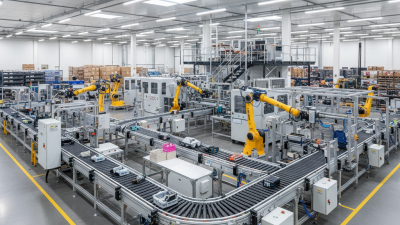
Robotics is evolving too. Collaborative robots work alongside human operators. They handle repetitive tasks with precision and speed. However, integrating these technologies is not without challenges. Careful planning and training are essential. The workforce needs to adapt to new roles. Balancing human and machine interaction remains a critical focus.
Top Intelligent Conveyor Models to Enhance Operational Efficiency
In today's fast-paced industrial landscape, intelligent conveyor systems are becoming essential. These systems automate the movement of goods, allowing for quicker processing times. Advanced models now utilize sensors and AI to optimize operations. They adapt to varying loads and help minimize downtime.
Many businesses have begun integrating these technologies, yet not all have seen immediate improvements. Some companies report challenges in training staff and aligning existing workflows. It's crucial to evaluate whether the automation tools meet specific operational needs.
While intelligent conveyors can enhance efficiency, not every model provides the same benefits. Factors like installation complexity and cost can be barriers. Continuous monitoring and assessment are vital for maximizing their effectiveness. Embracing these systems requires a commitment to adapt and refine processes over time.
Factors to Consider When Selecting an Intelligent Conveyor System
Choosing an intelligent conveyor system can significantly enhance operational efficiency. However, several factors must guide your decision. First, assess the specific needs of your operations. Consider the types of materials you handle. Different systems accommodate distinct weights and dimensions.
Compatibility with existing equipment is crucial. Ensure that the new conveyor system can integrate seamlessly. This can save time and reduce installation costs. Also, think about scalability. As trends shift, your business may need to adapt. A flexible system can accommodate future growth.
**Tips:** Regular maintenance is vital for longevity. A neglected system could lead to costly downtime. Training your staff on the new system enhances efficiency. It also prevents accidents and mistakes in operations. Listening to employee feedback after installation can help in making necessary adjustments.
Finally, consider the technology used in the conveyor system. Automation features can streamline processes. Yet, over-reliance on technology may create vulnerabilities. Evaluate the balance between automation and human oversight. While intelligent systems are efficient, reflective adaptability is essential for lasting success.
Future Trends and Innovations in Conveyor System Automation
The evolution of conveyor systems is rapidly transforming the landscape of
industry automation. Future trends indicate a significant shift towards intelligent systems that can improve efficiency and productivity. According to a report by Grand View Research,
the global conveyor systems market is expected to reach over $9 billion by 2025. This growth is largely driven by advancements in technology, including AI and IoT integration.
Automation in conveyor systems is becoming more sophisticated. Smart sensors, for instance, can monitor system performance in real-time.
These sensors gather data that can predict failures before they occur. This proactive maintenance approach minimizes downtime. A study from the
International Journal of Production Research highlighted that companies adopting smart conveyor systems experienced a
30% reduction in operational costs.
However, the transition poses challenges. Many organizations struggle with integrating new technologies with legacy systems.
The potential for error increases during this transition. Additionally, worker training is essential to maximize the benefits of advanced conveyor systems. While these innovations can lead to
significant efficiency gains, companies must address these hurdles to fully realize their potential.