2026 Top Conveyor Technology Trends for Global Buyers?
As we approach 2026, the landscape of Conveyor Technology is rapidly evolving. Global buyers must stay informed about emerging trends shaping this vital industry. The integration of automation and artificial intelligence is transforming how logistics operate. Smart systems are optimizing efficiency, reducing waste, and enhancing safety measures.
Many companies are hesitant to adopt these advances. Concerns about upfront costs and training can slow progress. However, the long-term benefits often outweigh these challenges. Conveyor systems equipped with real-time monitoring can predict maintenance needs, minimizing downtime. These technologies are not just innovations; they are essential in today's competitive market.
Understanding the latest trends in Conveyor Technology is crucial for effective decision-making. Buyers should prioritize reliable sources and expertise to guide their investments. As the industry shifts, staying ahead of the curve is pivotal. With a careful approach, businesses can harness these advancements for sustainable growth.

2026 Global Conveyor Market Overview: Key Statistics and Projections
The global conveyor market is expected to experience significant growth by 2026. Key statistics indicate a rising demand for automation across various industries. More businesses now recognize the efficiency conveyors bring to material handling. This shift is driving innovations in design and technology.
Projections show that the market will expand due to advancements in smart conveyor systems. These systems utilize AI and IoT for real-time monitoring. Companies are investing in integrated solutions that improve speed and accuracy in operations. Nevertheless, challenges remain, such as high initial costs and the need for specialized training.
The continuous evolution of conveyor technology reflects changing consumer preferences. Sustainability is becoming a priority, leading manufacturers to explore eco-friendly materials. However, the transition to greener solutions can be complex and costly. Buyers must weigh current needs against future trends, emphasizing the importance of careful planning and adaptability.
Emerging Automation Trends in Conveyor Technology for Enhanced Efficiency
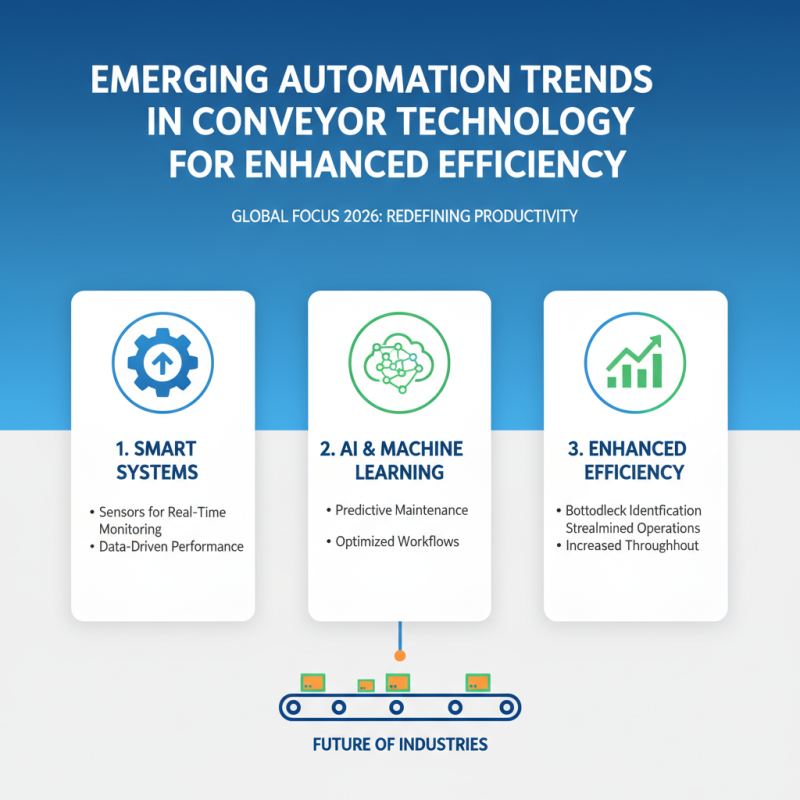
As automation continues to shape the future of industries, conveyor technology stands at the forefront. In 2026, enhanced efficiency is the primary focus for global buyers. New automation trends will redefine productivity and streamline operations across sectors. For instance, smart conveyor systems equipped with sensors can monitor performance in real-time. This data helps companies identify bottlenecks and optimize workflows.
AI integration is also transforming conveyor technology. Companies can now implement predictive maintenance. By analyzing data, AI can foresee when a conveyor might fail, reducing downtime. However, this shift requires training and adaptation. Employees must learn to work alongside smart technology, which poses initial challenges.
Sustainability is another vital trend. Energy-efficient conveyor systems reduce costs and environmental impact. Yet, the transition can be complex. Companies must balance new investments while ensuring current systems remain functional. These emerging trends reflect a significant shift in how industries approach efficiency and automation in conveyor technology.
Integration of IoT and AI in Conveyor Solutions for Real-time Monitoring
The integration of IoT and AI in conveyor solutions is reshaping manufacturing. These technologies enable real-time monitoring of conveyor systems. Sensors collect data on speed, load, and wear. AI analyzes this data for predictive maintenance. This process minimizes downtime and enhances efficiency.
Production accuracy improves with real-time insights. IoT devices communicate device health, providing operators with actionable information. This allows for timely adjustments. However, the reliance on technology raises questions about cybersecurity. Vulnerabilities could lead to significant disruptions.
Data overload is another concern. While real-time data is valuable, too much information can overwhelm operators. They may struggle to discern critical issues from routine information. This contradiction highlights the need for intuitive interfaces that prioritize crucial alerts. Balancing technology with human insight is essential for optimizing conveyor systems.
Key Global Players and Their Impact on Conveyor Technology Development
The conveyor technology landscape is rapidly evolving, influenced by key global players in the industry. These leaders drive innovation, shaping advancements with cutting-edge research and substantial investments. Their focus on automation and efficiency helps to streamline operations across various sectors, including manufacturing and logistics.
Emerging technologies like AI and IoT are driving the next wave of conveyor systems. These technologies enhance tracking and monitoring capabilities, ensuring optimal performance. Global players are increasingly collaborating with tech firms to implement these solutions. However, challenges remain. Not all companies can adapt quickly to these changes due to cost concerns or a lack of expertise.
Sustainability is another pressing issue. Many players aim to reduce environmental impact. Still, adopting eco-friendly materials and energy-efficient systems may not be straightforward. While innovations abound, companies must reflect on their practices. The goal is to balance technological advancement with sustainable development.
2026 Conveyor Technology Trends