Leave Your Message

Top 10 Benefits of Automation Conveyor Systems for Businesses

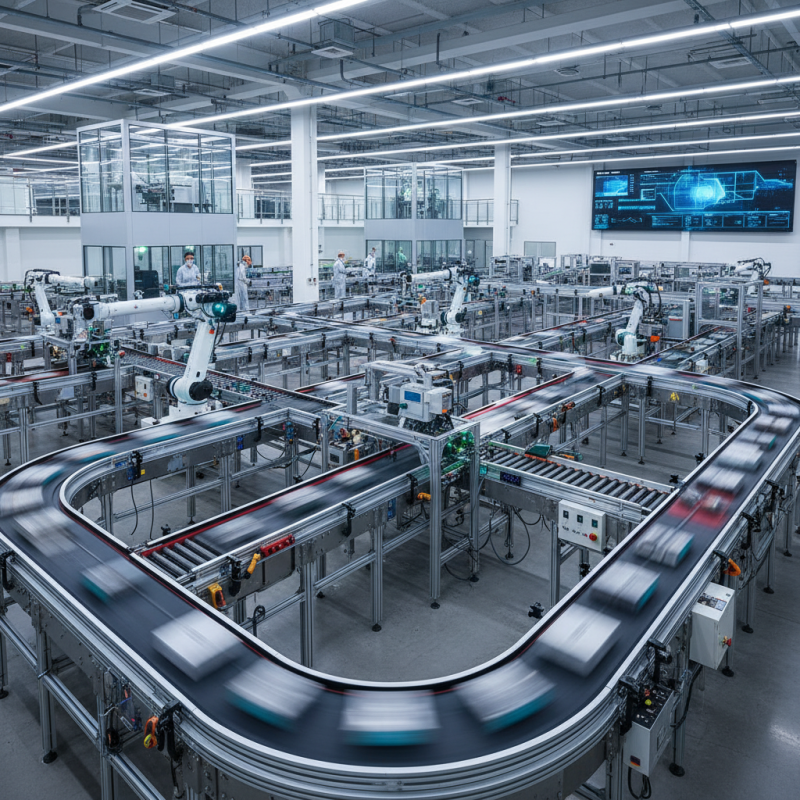
Automation Conveyor Systems are transforming industries today. These systems enhance efficiency and productivity, which is vital for business success. According to Dr. Emily Chen, a renowned expert in automation technology, "The future of manufacturing is fundamentally tied to advanced automation solutions."

Investing in Automation Conveyor Systems can streamline operations. They reduce manual labor, leading to fewer errors. Businesses can increase their output without compromising quality. However, there are challenges. Transitioning to automated systems can be daunting. Employees may resist change, fearing job losses. This concern highlights the need for effective training and communication.

Yet, the benefits are undeniable. Enhanced speed and accuracy provide a competitive edge. Companies that adapt quickly will thrive. In the fast-paced business environment, Automation Conveyor Systems are not just an option; they are essential for growth and resilience. Embracing this technology means embracing a new era of productivity.
Top 10 Benefits of Automation Conveyor Systems for Businesses

Benefits of Increased Efficiency and Productivity in Automation Conveyor Systems

Automation conveyor systems play a vital role in enhancing efficiency and productivity in various businesses. These systems streamline operations, reducing the time taken for product movement. According to a report by the Material Handling Industry of America, companies using automated systems have seen operational efficiency improve by nearly 30%. This translates to faster production times and lower operational costs.

Improved efficiency leads to fewer errors. Automation minimizes human involvement in repetitive tasks, allowing workers to focus on more complex issues. Studies show that automated processes can reduce errors by up to 50%. This not only ensures higher quality output but also improves employee morale, as workers tackle more engaging tasks.

Tip: Regularly review your conveyor system layout. An optimized layout can reduce transit times significantly.

Another aspect is the data collection capabilities of automation conveyor systems. Automated systems provide real-time tracking and analytics. Businesses can identify bottlenecks, forecast maintenance needs, and optimize workflows. A survey from McKinsey found that companies integrating data-driven decision-making experienced a 10%-20% gain in productivity.

Tip: Invest in employee training on the new systems. This ensures everyone is on board with the technology and can fully utilize its benefits.
Reduction of Labor Costs through Automation in Conveyor Operations

Automation conveyor systems are transforming industries by significantly reducing labor costs. According to a report by the McKinsey Global Institute, automation can boost productivity by up to 30% in manufacturing settings. This increase leads to a substantial decrease in workforce requirements. Businesses often note that the initial investment pays off within a few short years due to lowered operational expenses.

In warehouses, conveyor systems automate the movement of goods. A study from the Logistics Management Journal highlights that companies can save approximately 20% on labor costs when utilizing automated conveyor solutions. Fewer workers are needed for manual tasks, and employees can focus on higher-value jobs. However, this shift can create employment challenges. Workers may need reskilling for more advanced roles, which can lead to temporary disruptions.

Despite these advantages, some companies struggle with the transition. The misconception that automation solely eliminates jobs can hinder acceptance among staff. Studies show that communication and training are essential for successful implementation. This phase often reveals weaknesses in current workflows, prompting necessary adjustments. Thus, while the benefits are clear, the path to successful automation requires careful planning and reflection on workforce impacts.

Enhancing Safety Standards with Automated Conveyor Systems

Top 10 Benefits of Automation Conveyor Systems for Businesses

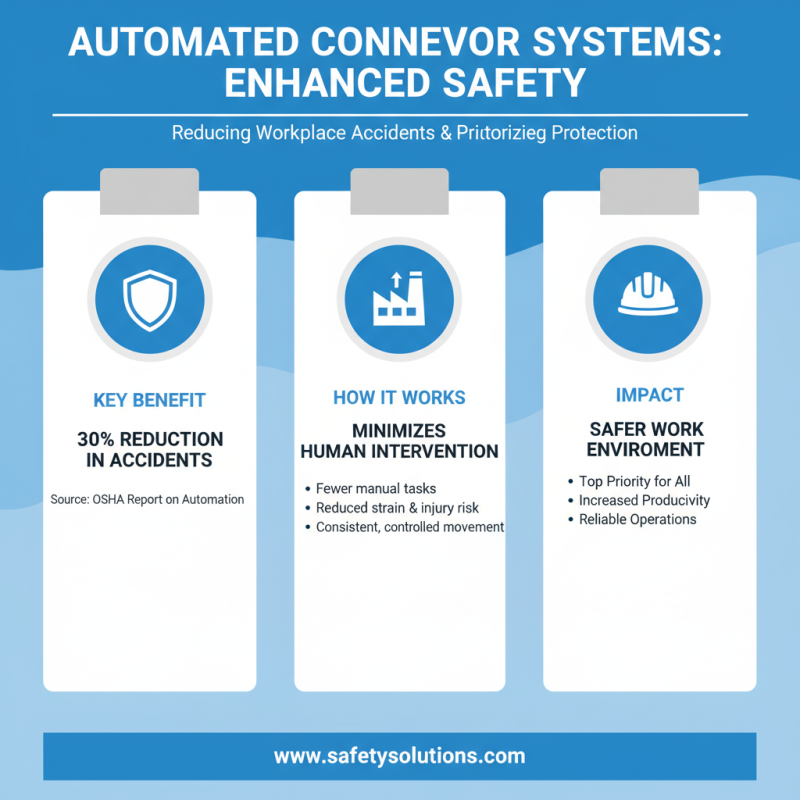
Automated conveyor systems play a significant role in enhancing safety standards in manufacturing and warehousing environments. According to a report by the Occupational Safety and Health Administration (OSHA), industries that adopted automation saw a 30% reduction in workplace accidents. This reduction is critical as safety is a top priority for employers and employees alike.

These conveyor systems minimize manual handling, thereby reducing the risk of injuries such as strains and musculoskeletal disorders. Employees are less exposed to hazardous environments, leading to a calmer workspace. Furthermore, automated systems often include safety features like emergency stops and sensors that detect human presence. Such features promote a culture of safety while enhancing operational efficiency.

**Tips:** When considering automation, evaluate the specific safety challenges in your operations. Ensure ongoing training for employees to adapt to new systems. Regularly review safety protocols to identify areas for improvement. Contracts with reliable safety inspection services can also enhance safety compliance.

Integration of automated conveyor systems not only improves safety but also boosts productivity. According to a McKinsey report, automation can increase productivity by up to 20% in certain sectors. This is a reminder that while automation brings multiple benefits, it requires thoughtful implementation and constant review.

Improved Inventory Management with Automation Conveyor Solutions

Top 10 Benefits of Automation Conveyor Systems for Businesses

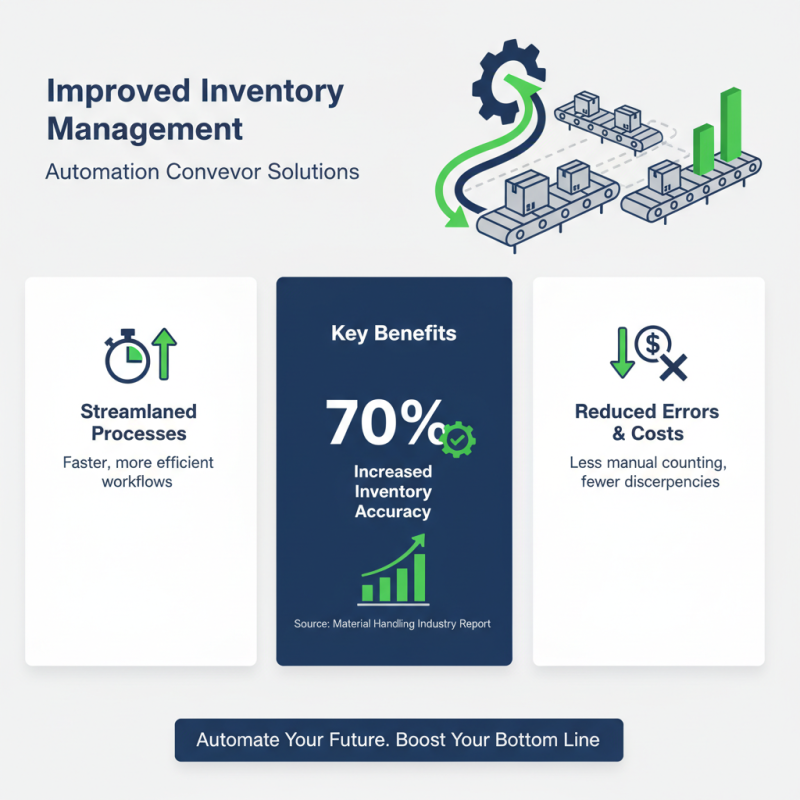
Automation conveyor systems significantly enhance inventory management. By integrating these systems, businesses can streamline their processes. According to a recent report by the Material Handling Industry, 70% of companies using automated conveyor solutions saw improved accuracy in their inventory counts.

These systems reduce human error. With automated conveyors, products move consistently and reliably. This leads to fewer misplaced items. A study indicated that companies reporting low inventory accuracy lost up to 25% in revenue. Automation can effectively mitigate this loss.

Moreover, automated systems offer real-time tracking of goods. This visibility ensures that inventory levels are always up to date. Businesses can respond quickly to changes in demand patterns. However, initial setup costs can be high, leading to hesitation in implementation. Despite this, the long-term benefits often outweigh these concerns. Investing in automation may require careful consideration, yet the resulting efficiency is undeniable.

Flexibility and Scalability of Automation Conveyor Systems for Growing Businesses

Automation conveyor systems present immense flexibility and scalability for businesses. As operations grow, these systems adapt easily to changing demands. Adding new sections or features is often a straightforward process. This scalability ensures companies can respond quickly to market changes.

When integrating automation systems, consider your facility layout. A clear design helps optimize efficiency. Use modular components to enable easy adjustments in the future. This approach allows businesses to pivot quickly without major disruptions. It's vital to plan for potential expansions from day one.

Tips: Regularly assess your workflow. Understand where bottlenecks occur. This awareness can guide decisions about system enhancements. Additionally, train employees on the system. Their insights can provide valuable feedback for further improvements.

Top 10 Benefits of Automation Conveyor Systems for Businesses

Benefit Description Impacts on Business
Increased Efficiency Automated systems streamline the flow of materials, reducing delays. Higher throughput and productivity levels.
Cost Savings Reduced labor costs and minimized errors lead to lower operational costs. Increased profit margins.
Improved Safety Conveyor systems reduce manual handling, minimizing accidents. Safer workplace environment enhances employee morale.
Flexibility Easily adaptable to changing layouts and production processes. Supports rapid response to market changes.
Scalability Systems can be expanded with business growth. Facilitates future expansion without significant capital outlay.
Consistent Quality Automation ensures uniformity in handling materials. Enhances product quality and reduces defects.
Data Collection Integrated systems can automatically capture data for analysis. Informed decision-making based on real-time data.
Space Efficiency Optimized design minimizes space requirements. Maximizes available floor space utilization.
Sustainability Automation can lead to energy savings and waste reduction. Contributes to corporate social responsibility goals.
Enhanced Tracking Improved visibility of inventory from start to finish. Better inventory management and forecasting.