China Top Conveyor and Automation Technologies for Efficient Industries?
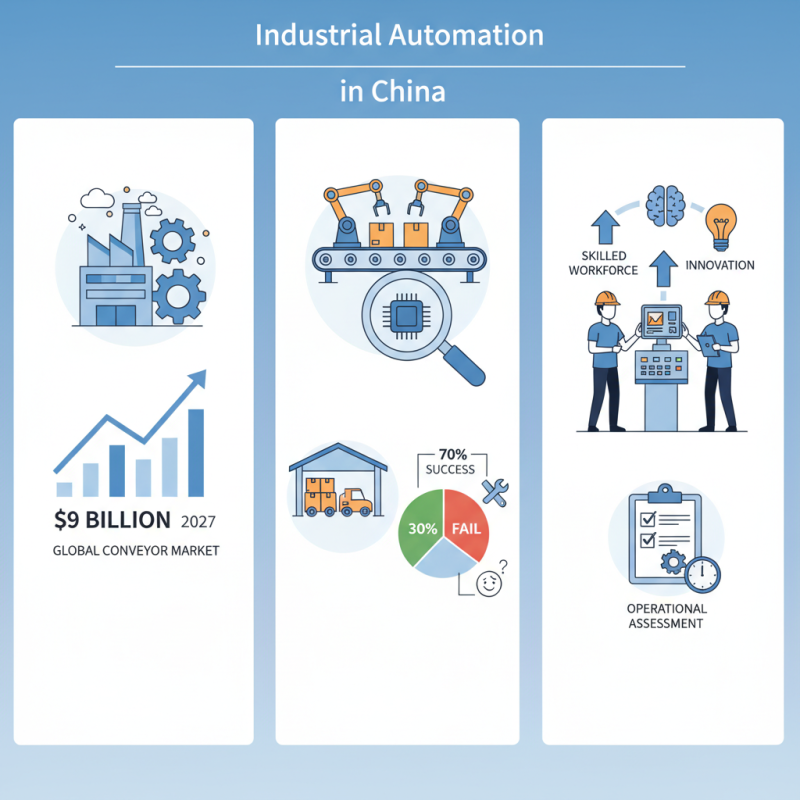
In recent years, the demand for Conveyor and Automation technologies in China has surged. This growth is driven by an increasing need for efficiency in various industries. According to a report by MarketsandMarkets, the global conveyor market is projected to reach $9 billion by 2027, with automation in warehouse operations leading this trend. China, being a manufacturing powerhouse, is at the forefront of adopting these technologies.
Notably, many companies are integrating smart conveyor systems that enhance productivity and reduce labor costs. However, not all organizations effectively implement these systems. Challenges such as inadequate training and poor management practices often hinder successful automation. Industry surveys indicate that approximately 30% of automation projects fail to meet their expected outcomes. This calls for a critical evaluation of how businesses approach the adoption of Conveyor and Automation technologies.
As industries evolve, the focus must be on fostering a skilled workforce that can maximize automation benefits. Investing in employee training is as crucial as upgrading machinery. Moreover, facilities must continuously assess their operational needs. The journey towards efficient industries through Conveyor and Automation is indeed promising but riddled with complexities that require careful navigation.
Overview of Conveyor and Automation Technologies in China
China has made significant strides in conveyor and automation technologies, which are crucial for enhancing industrial efficiency. According to a report by the China National Machinery Industry Corporation, the conveyor systems market in China is expected to grow at a CAGR of 9.6% between 2021 and 2025. This reflects the growing demand for streamlined processes in various sectors, from manufacturing to logistics.
The automation landscape in China is also evolving. The International Federation of Robotics estimates that the density of industrial robots in China reached 187 robots per 10,000 workers in 2020. This is a strong indication of the focus on automation to boost productivity. However, some industries still face challenges, such as integrating new technologies and training workers. Many factories struggle with the transition to smart systems, highlighting a skill gap that needs addressing.
Moreover, sustainability concerns have emerged as industries seek to reduce their carbon footprints. While advanced conveyor systems can improve energy efficiency, the shift to greener technologies is still a work in progress. Companies often grapple with balancing innovations in automation with environmental regulations and cost implications. There is a clear need for ongoing assessment and adaptation in this rapidly changing technological landscape.
China Top Conveyor and Automation Technologies for Efficient Industries
| Technology Type |
Application Area |
Efficiency Gains (%) |
Cost Reduction (%) |
Integration Level |
| Automated Guided Vehicles (AGVs) |
Warehousing |
30 |
25 |
High |
| Belt Conveyors |
Manufacturing |
20 |
15 |
Medium |
| Robotic Palletizers |
Food & Beverage |
40 |
30 |
High |
| Conveyor Sortation Systems |
Distribution Centers |
35 |
22 |
High |
| Continuous Flow Systems |
Logistics |
25 |
20 |
Medium |
Innovative Technologies Shaping Efficient Industries in China
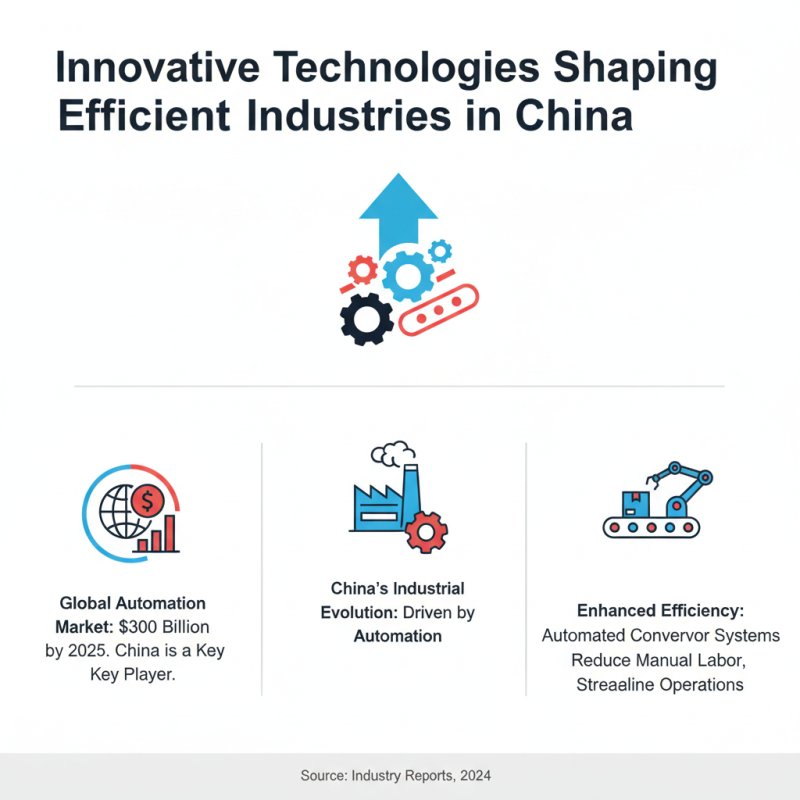
The landscape of industries in China is rapidly evolving, driven by innovative conveyor and automation technologies. Reports indicate that the global market for automation is expected to reach $300 billion by 2025, with China playing a significant role. Enhanced efficiency is now a priority; manufacturers are increasingly adopting automated conveyor systems. These systems reduce manual handling and streamline operations.
A study by the International Federation of Robotics highlights that over 40% of Chinese manufacturers have implemented automation solutions. These systems utilize artificial intelligence to optimize logistics and production processes. However, some industries still rely heavily on outdated methods, hindering their overall productivity. Bridging this gap is essential for improving efficiency.
Furthermore, as technology advances, some businesses face challenges in integration. The reliance on legacy systems can create friction during upgrades. Effective training programs are vital to equip the workforce with necessary skills. Embracing innovative technologies is not just about investment. It requires a cultural shift within firms to foster adaptability and continuous improvement.
Applications of Conveyor Systems Across Various Sectors
Conveyor systems have become essential across various sectors, significantly enhancing operational efficiency. In manufacturing, they streamline assembly lines, reducing labor costs by up to 30%, according to industry reports. In warehousing, automated conveyors are improving order fulfillment times by as much as 25%. These systems handle both standard and customized materials, making them versatile for different applications.
In the food and beverage industry, conveyors are crucial for maintaining hygiene standards. They help transport products quickly while minimizing human contact. A study found that implementing conveyor systems can reduce contamination risks by approximately 20%. However, as companies invest in these technologies, they must also consider maintenance costs and training for employees.
Tips: Always assess the total cost of ownership when implementing new conveyor systems. Regular training ensures employees can operate equipment safely and efficiently. Moreover, consider scalability—future-proofing systems can save costs in the long run.
Future Trends in China's Conveyor and Automation Technologies
Emerging trends in China's conveyor and automation technologies present significant opportunities for industrial efficiency. Automated systems are becoming more complex, integrating AI and machine learning. These advancements allow for smarter logistics and improved supply chain management. Factories are now deploying automated guided vehicles (AGVs) to streamline operations. AGVs reduce manual labor and minimize errors, increasing productivity.
Despite the positive aspects, challenges remain. The integration of new technologies often requires substantial investment and skilled personnel. Many businesses struggle to adapt to rapid changes. Training staff on advanced systems can be daunting. As automation becomes more prevalent, the workforce must navigate these shifts.
Moreover, sustainability concerns are significant. Industries are under pressure to adopt eco-friendly practices. The use of energy-efficient conveyors and automation systems is on the rise. However, balancing cost, efficiency, and environmental impact requires thoughtful consideration. Companies must regularly evaluate their strategies to remain competitive and responsible. These reflections are essential as China moves towards a more automated future.
China's Conveyor and Automation Technologies Trends