How to Choose the Right Automation Conveyors for Your Business Needs?
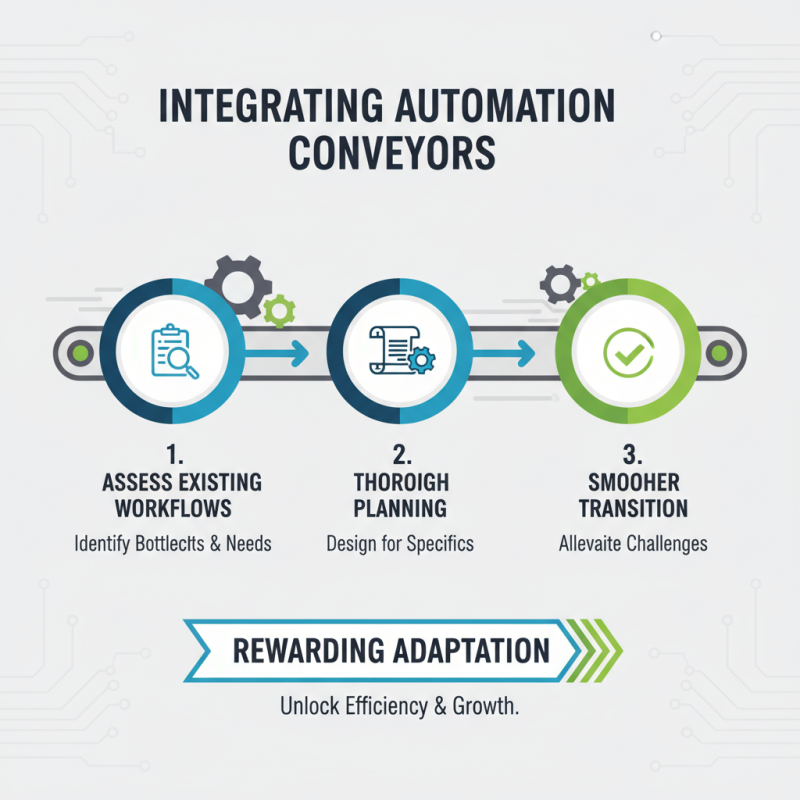
Choosing the right automation conveyors for your business needs is vital. Automation conveyors play a crucial role in modern industries. They enhance efficiency and productivity, but not all options suit every business. Understanding your unique requirements is key to making the right choice.
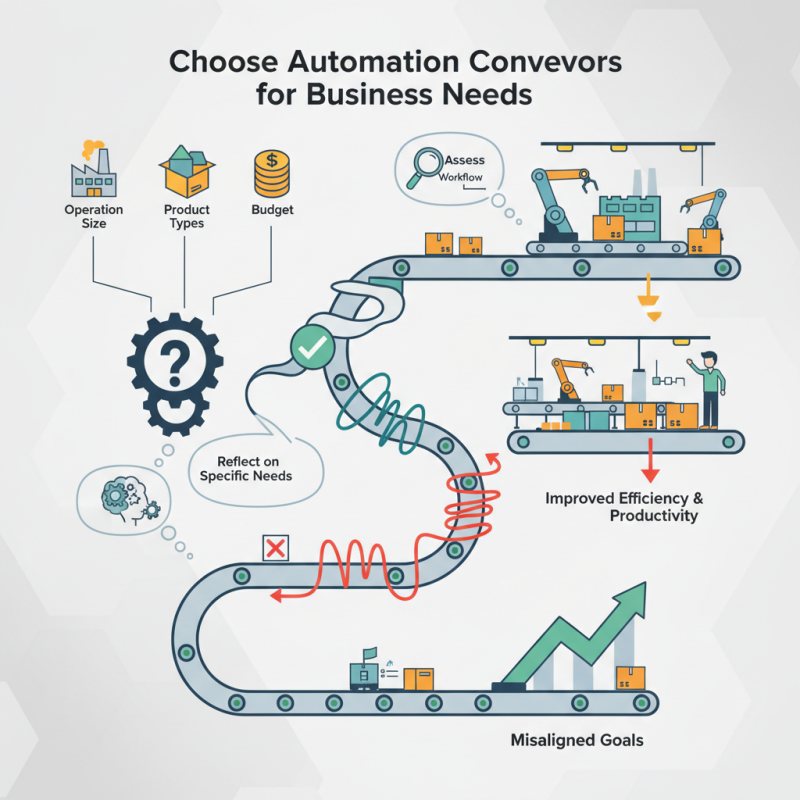
Many factors come into play. The size of your operation, the types of products handled, and your budget all matter. Each business is different. A small warehouse may need simpler models. A large factory may require advanced systems. It’s essential to assess your workflow before selecting.
Ultimately, the right automation conveyors can transform operations. They streamline processes and reduce manual labor. However, it’s important to reflect on your specific needs. Sometimes, businesses choose features that do not align with their goals. Take time to evaluate options carefully. A well-thought-out choice can lead to significant improvements in efficiency.
Understanding Your Business Requirements for Automation Conveyors
Choosing the right automation conveyor system for your business hinges on understanding specific requirements. Effective systems can increase efficiency, reduce labor costs, and enhance productivity. According to a report by ResearchAndMarkets, the global conveyor systems market is expected to grow by over 4% annually, indicating strong demand and potential for improvement.
To start, assess the types of materials you handle. Are they heavy, light, or fragile? Different conveyors are designed to accommodate various weights and sizes. Next, evaluate the space available in your operational area. Limited space can restrict your options, making it crucial to choose a conveyor that fits your layout. Conducting a thorough analysis of your workflow will help identify where bottlenecks occur and how automation can help.
Tip: Take time to evaluate future needs. What will your business look like in five years? Will your automation requirements change?
Remember,
flexibility is key. Some businesses find themselves stuck with rigid systems that can’t adapt to their evolving processes. Regularly reviewing your operations allows you to stay agile in your equipment choices.
Tip: Consult with industry experts. Their insights can help clarify which features are essential for your specific needs.
Identifying Different Types of Automation Conveyors Available
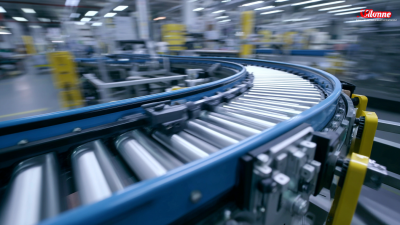
When identifying the right automation conveyors for your business, understanding the various types is essential. Automation conveyors can be broadly classified into belt conveyors, roller conveyors, and modular belt conveyors. Each type serves unique functions and is better suited for different applications. For instance, belt conveyors are ideal for transporting bulk materials. They are often used in manufacturing and packaging industries, where uniform movement is critical.
Data from industry reports suggest that the global conveyor systems market is expected to grow by approximately 4.5% annually. This growth emphasizes the increasing reliance on automation in various sectors. Roller conveyors, on the other hand, are highly effective for packaging and shipping operations. They allow for quick movement of items, making them suitable for warehouses. However, users must consider their setup space. Modular belt conveyors are another option, known for their flexibility and ease of maintenance, yet they can be more complex to install.
Deciding on the right type requires careful analysis of operational needs. Each conveyor type has its pros and cons. For example, although belt conveyors are less expensive, they may not handle irregularly shaped products well. Additionally, operational costs, including energy consumption, should also be assessed. Evaluating these details ensures that the chosen system aligns with both budget and functionality.
Types of Automation Conveyors Available
Evaluating Conveyor Specifications and Performance Metrics
Choosing the right automation conveyors involves careful consideration of specifications and performance metrics. Start by assessing your facility's layout and workflow. Understand how materials will move within your space. Measure the distance between operations. This will guide the length and type of conveyor you need.
Tip: Always account for the weight capacity of the conveyor. Overloading can lead to breakdowns. Evaluate the surface material. A surface that isn't suitable may cause slippage or damage to products.
Look at speed and throughput. Will the conveyor handle the required volume efficiently? Check if the conveyor system can be integrated with existing equipment. Compatibility is crucial for smooth operation.
Tip: Keep in mind maintenance needs. Some systems require more upkeep than others. An overlooked maintenance schedule can create avoidable downtime. Review energy consumption as well. An efficient conveyor saves costs in the long run.
Assessing Cost-Effectiveness and Budget Constraints
When assessing the cost-effectiveness of automation conveyors, it's essential to align your budget with business goals. According to industry reports, businesses can save up to 30% in labor costs by automating conveyor systems. This significant potential return on investment can often justify initial expenditures. However, don’t overlook maintenance costs, which can vary widely. Regular upkeep is crucial for optimal performance.
Tips: Consider long-term costs. Research average maintenance expenses in your sector. It’s advisable to track these over time.
Understanding different system types is also vital. Some conveyors are more energy-efficient, leading to savings on electricity bills. For example, a well-optimized conveyor can reduce energy costs by as much as 25%. It’s important to evaluate both upfront costs and these ongoing savings.
Tips: Analyze energy consumption. Look for conveyors with high efficiency ratings. Sometimes, newer models provide better energy savings.
Be wary of hidden costs. Installation and training can add up quickly. In a recent survey, nearly 40% of companies didn’t factor in these costs during their budgeting process. An informed decision requires transparent calculations of every expense involved.
How to Choose the Right Automation Conveyors for Your Business Needs? - Assessing Cost-Effectiveness and Budget Constraints
| Conveyor Type |
Cost per Unit ($) |
Maintenance Cost ($/year) |
Operational Efficiency (%) |
Space Requirement (sq ft) |
| Belt Conveyor |
1500 |
200 |
85 |
100 |
| Roller Conveyor |
1200 |
150 |
90 |
80 |
| Chain Conveyor |
2000 |
300 |
75 |
120 |
| Bucket Elevator |
2500 |
350 |
80 |
90 |
| Pallet Conveyor |
3000 |
400 |
85 |
150 |