How to Choose the Right Conveyor Systems for Your Business?
Choosing the right conveyor systems for your business is a crucial decision. Effective conveyor systems can boost productivity and streamline operations. However, many companies overlook essential factors that impact their efficiency.
When selecting conveyor systems, consider specific needs. Think about the type of materials you handle and the layout of your facility. Not all systems fit every scenario. A deep understanding is vital for making an informed choice. Companies often rush this process and later face challenges that could have been avoided.
Additionally, reliability is key. An inefficient system can lead to delays and increased costs. Researching vendors and reading reviews can provide insights into their credibility. Remember, making a well-informed choice today can lead to smoother operations tomorrow. It’s important to reflect on what works best for your unique situation.
Understanding Your Business Needs for Conveyor Systems
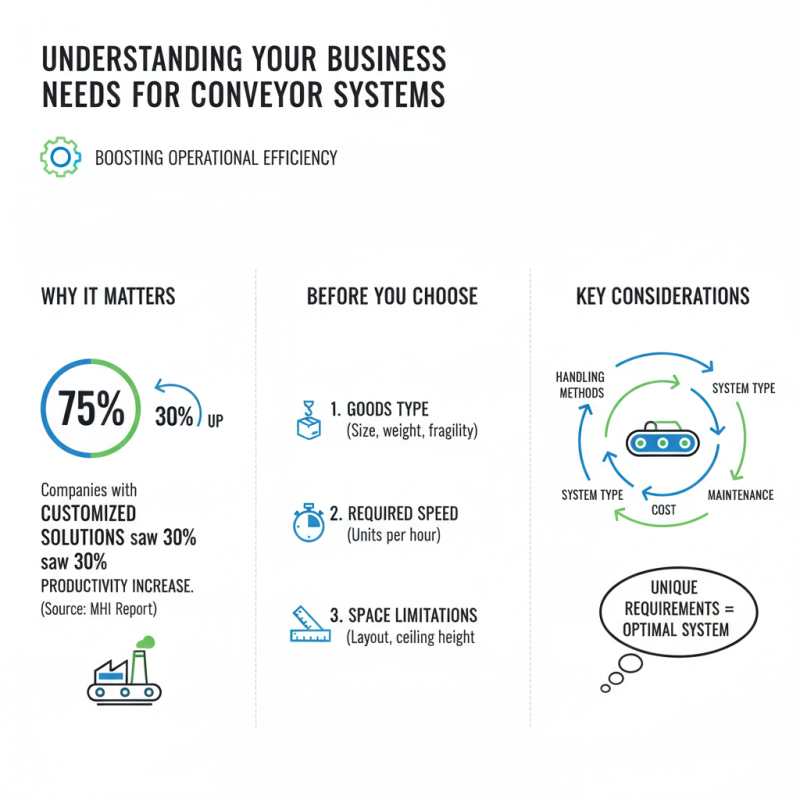
Understanding your business needs for conveyor systems is crucial for achieving operational efficiency. According to a report from the Material Handling Industry of America, 75% of companies that invested in customized conveyor solutions saw a 30% increase in productivity. Before selecting a system, identify your unique requirements. Consider factors such as the types of goods you transport, the required speed, and space limitations. Different goods may require different handling methods, which can influence your choice.
Employee safety is another crucial factor. A study by the National Institute for Occupational Safety and Health revealed that conveyor-related injuries account for 5% of all workplace injuries. Selecting a system with an emphasis on safety features can significantly mitigate risks. Furthermore, maintenance and reliability are essential for long-term success. Understanding the technical specifications and service needs is vital. Each system has its peculiarities, and misjudgments can lead to unforeseen expenses and downtime.
Incorporating automation into your conveyor system may also be beneficial. A survey by the International Society of Automation indicated that automation can reduce operational costs by 20% over time. However, it is vital to assess whether your workforce is prepared for this transition. Some organizations struggle with integrating new technology, resulting in potential disruptions. Evaluating your readiness can save time and resources.
Analyzing Different Types of Conveyor Systems and Their Applications
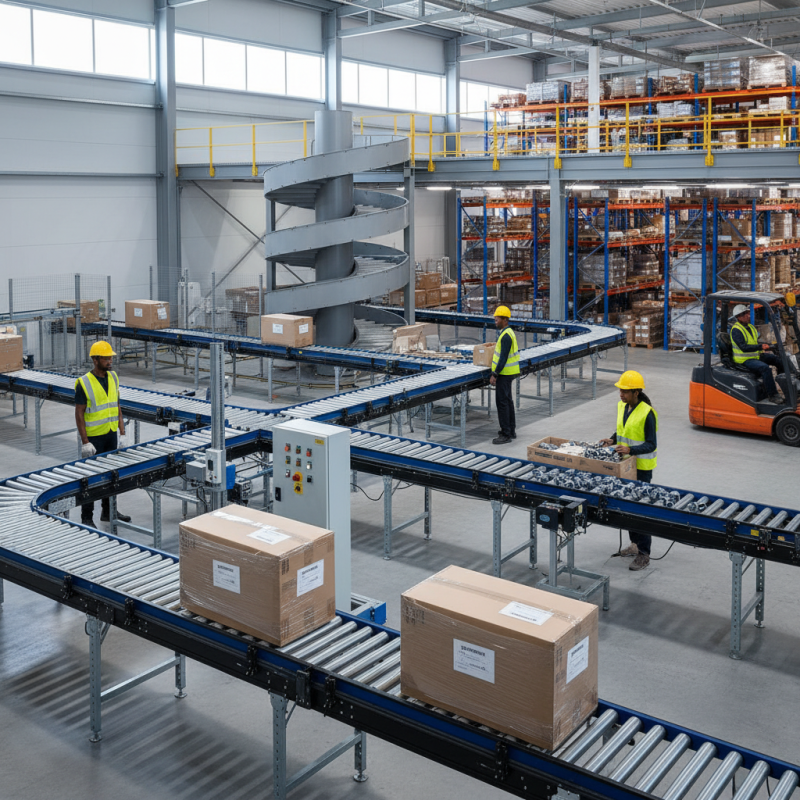
Choosing the right conveyor system is crucial for optimizing operational efficiency. Various types of conveyor systems serve different needs in industries, from manufacturing to logistics. For instance, roller conveyors are efficient for heavy items, while belt conveyors are more suited for moving lighter loads smoothly.
Data from a recent industry report shows that over 70% of warehouses see improved productivity after installing modular conveyor systems. These systems can adapt to various layouts and workflows, offering flexibility that stationary systems do not. However, choosing the wrong type can lead to inefficiencies and increased costs, so careful analysis is essential.
Tips: Assess your space requirements before making a choice. Ensure the system fits your workflow, and consider future expansions. Additionally, consult with experts to evaluate the capacities and specifications of each system. Every facility is unique; a one-size-fits-all approach often results in performance gaps that can affect overall productivity.
Evaluating Conveyor Specifications: Speed, Load Capacity, and Maintenance
When choosing a conveyor system, specifications like speed, load capacity, and maintenance come into play. Speed is vital for efficiency. A slow conveyor can bottleneck processes, affecting productivity. Understanding the ideal speed for your operation involves considering the items being transported. For fragile goods, a slower pace is preferable to avoid damage. However, faster speeds may be necessary for high-demand environments.
Load capacity is equally crucial. Each conveyor system has a maximum weight it can handle. Exceeding this limit may cause breakdowns or safety hazards. Evaluating your typical load helps in selecting the right system. It’s essential to anticipate future demands as well. Growth can lead to challenges if your conveyor can’t keep up with increased loads.
Maintenance is often an overlooked aspect. Regular checks can prevent downtime. Developing a maintenance schedule and training staff can enhance system longevity. Consider the availability of spare parts for the chosen system. If replacements are hard to find, it might lead to prolonged delays. Reflecting on these factors can guide you toward a more effective conveyor system that meets your unique business needs.
Choosing the Right Conveyor Systems: Evaluation of Speed, Load Capacity, and Maintenance
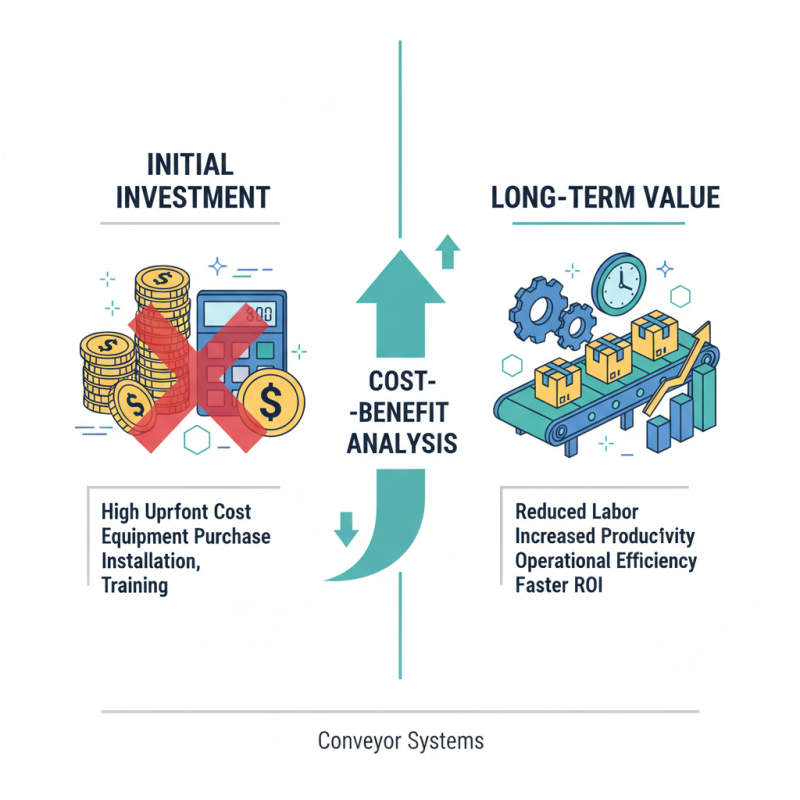
Cost-Benefit Analysis: Investment vs. Long-term Value in Conveyor Systems
When considering conveyor systems, a cost-benefit analysis is essential. Businesses often focus on the initial investment, which can be significant. However, it’s crucial to weigh this against long-term value. Efficient conveyor systems can streamline operations, reduce labor costs, and improve productivity. These factors contribute to a more favorable return on investment over time.
A system may appear costly upfront, but hidden savings can emerge. For instance, quicker material handling leads to faster turnaround times. Enhanced safety features can reduce workplace accidents. These benefits might not be immediately apparent, making a thorough analysis necessary. Engaging with industry experts can offer insights into potential hidden costs or benefits that may influence your decision.
Additionally, reviewing case studies can highlight discrepancies between projected savings and real outcomes. Some businesses invest heavily, yet do not achieve anticipated efficiency gains. It's important to take stock and adjust your approach accordingly. Reflecting on past experiences helps refine future investments and better align them with business goals.
Integrating Conveyor Systems with Existing Warehouse Automation Technology
Integrating conveyor systems with existing warehouse automation can streamline operations significantly. The right integration ensures all components work harmoniously. However, it isn't always straightforward. Different technologies may not communicate effectively. This can lead to delays and increased costs.
Assessing compatibility is crucial. Evaluate the current systems. Identify any gaps in functionality. For instance, older automation technologies may struggle with newer conveyor systems. This can cause bottlenecks in process flows. Regular reviews can help identify areas needing improvement.
Training staff is another key element. Workers must understand how to operate these systems efficiently. Misunderstanding can lead to errors. Continuous feedback can enhance their adaptation to new processes. Consider regular meetings to address challenges and provide solutions. This collaborative approach can ultimately lead to better efficiency.
How to Choose the Right Conveyor Systems for Your Business?
| Conveyor Type |
Best For |
Load Capacity (lbs) |
Speed (ft/min) |
Integration Compatibility |
| Belt Conveyor |
Material handling and packaging |
500 |
60 |
High interoperability |
| Roller Conveyor |
Transporting heavy pallets |
1000 |
30 |
Moderate technology |
| Chain Conveyor |
Automotive and heavy industries |
2000 |
15 |
Low compatibility |
| Modular Conveyor |
Flexible layouts |
300 |
50 |
High adaptability |