What is Conveyor Manufacturing and How Does it Work?
Conveyor manufacturing is a critical component of modern industrial processes. The global conveyor systems market is expected to reach $8.6 billion by 2025. This growth highlights the rising importance of conveyor systems in enhancing efficiency and productivity across various industries.
Various sectors, including manufacturing, logistics, and food processing, rely heavily on conveyor systems. These systems streamline operations by transporting materials efficiently. Specialized conveyor equipment is often customized for specific workloads and environments. However, challenges arise in maintaining system integrity and performance standards.
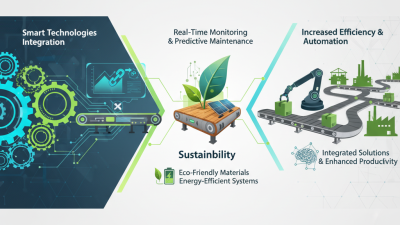
Moreover, sustainability is becoming a focal point in conveyor manufacturing. Companies are pressured to adopt eco-friendly materials and processes. As industries evolve, the need for innovation in conveyor technologies becomes evident. Manufacturers must balance performance with environmental responsibility. Ultimately, the industry must reflect on its practices to remain relevant and effective in a changing world.
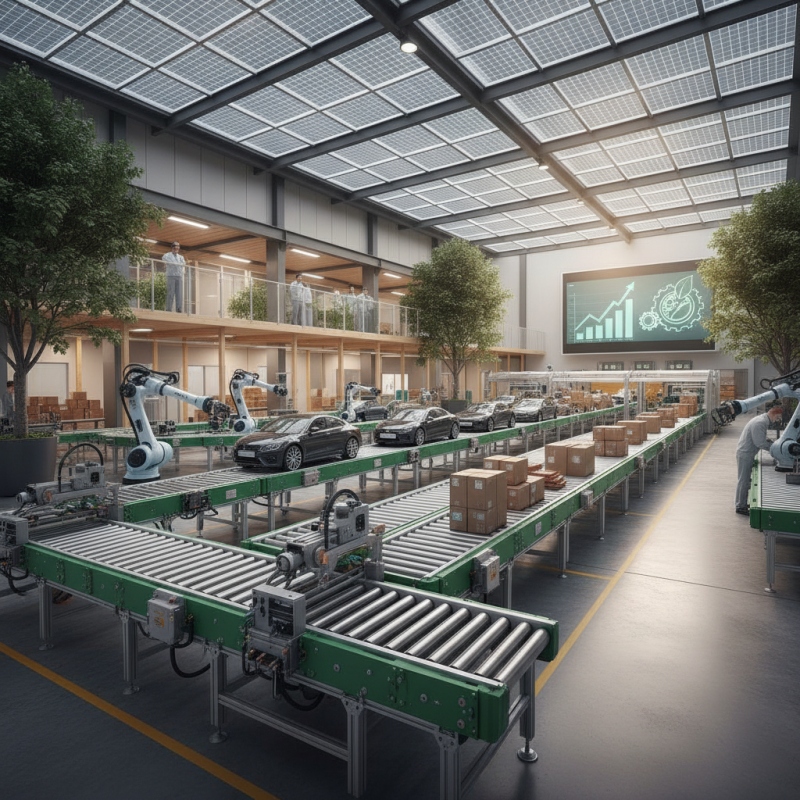
Understanding Conveyor Manufacturing: A Comprehensive Overview
Conveyor manufacturing involves creating systems that transport materials efficiently. This process integrates various components, including belts, rollers, and motors. Each part plays a critical role in the conveyor's function. Understanding the manufacturing steps can help one appreciate the complexity of these systems.
During assembly, precision is essential. Misalignment can lead to inefficiencies and increased wear. It's important to regularly check components for any signs of wear or damage. Quality control measures are crucial. Mistakes at this stage can lead to costly repairs later.
Tips: Always assess the workspace before installation. Clear areas ensure better maneuverability. For ongoing maintenance, establish a schedule for inspections. This can prevent issues before they arise. Understanding the limitations of your system is vital. Overloading can cause significant damage. Reflect on your processes and make adjustments when necessary.
Key Components of Conveyor Systems and Their Functions
Conveyor systems play a vital role in various industries, offering an efficient means of transporting materials. Understanding their key components can help in designing effective systems. The first major component is the belt. It carries the load from one end to another. Different materials, like rubber or fabric, are used for belts, depending on the application.
Next, pulleys are essential for the functioning of conveyor systems. They are located at the ends of the conveyor belt. Their rotating motion keeps the belt moving smoothly. Idlers are equally important. They support the belt, preventing sagging while reducing friction. Without well-placed idlers, the system could suffer from wear and tear.
Motor drives are another critical part, providing the necessary power. Selecting the right motor size and type is often overlooked. Inadequate power can lead to frequent breakdowns. Control systems manage speed and direction, adding complexity to operations. Balancing these components can be challenging. Misalignment can cause inefficiencies, leading to costly repairs. Ensuring that each part functions harmoniously is vital for optimal performance.
The Conveyor Manufacturing Process: Steps and Techniques
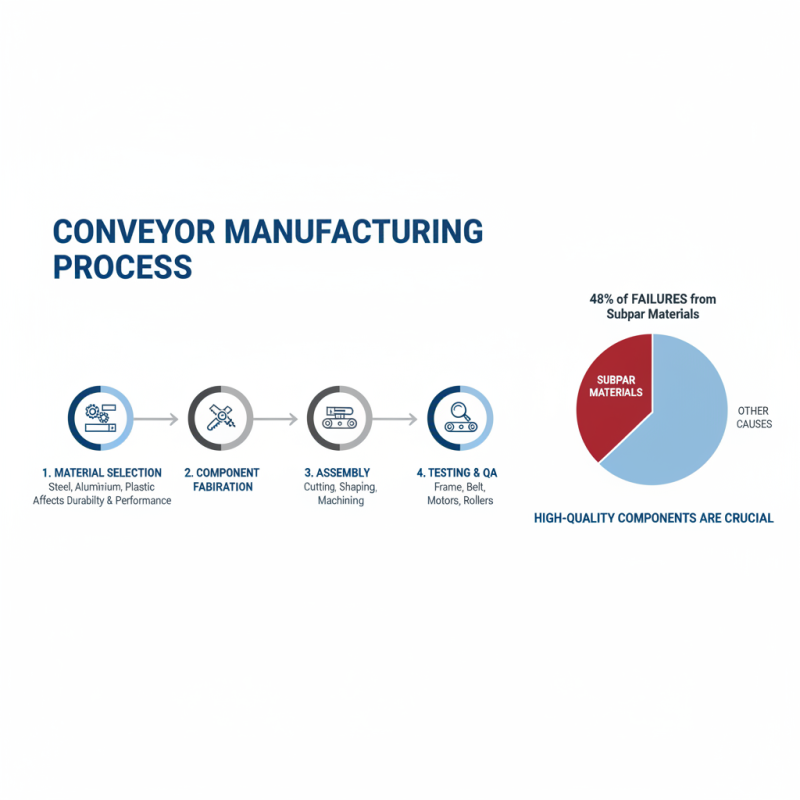
The conveyor manufacturing process involves several key steps and techniques that ensure efficiency. It begins with material selection, where high-quality components are crucial. Common materials include steel, aluminum, and plastic. Each choice affects durability and performance. According to industry reports, 48% of conveyor failures result from subpar materials.
Next comes design and engineering. It's essential to tailor designs to specific operational needs. This stage blends creativity with technical expertise. Engineers draft plans using CAD software, optimizing every detail. This is where issues can arise. Sometimes, designs do not translate well into reality. Prototyping helps identify flaws early.
During assembly, skilled workers piece together components. Precision is vital here; a small error can lead to significant issues later. Systems often require adjustments based on testing results. Continuous evaluations help fine-tune operations. This phase is not without challenges. Maintaining a balance between speed and quality is tricky.
**Tip:** Regular maintenance can extend conveyor life. Schedule inspections to prevent unexpected breakdowns. Keeping detailed logs aids in tracking performance.
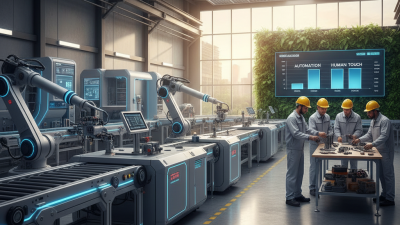
Furthermore, implementing automation can enhance efficiency. Automated systems reduce labor costs and increase reliability. However, they require upfront investment and careful planning. Not all facilities may benefit equally from automation.
**Tip:** Analyze your specific needs before deciding to automate. It’s better to adapt than to overhaul everything at once.
Types of Conveyors and Their Industrial Applications
Conveyor systems are vital in various industries, transforming the way materials are moved. There are different types of conveyors. Each type serves unique purposes.
Belt conveyors are common in manufacturing. They transport bulk materials smoothly over long distances. According to industry reports, about 60% of all conveyors in use today are belt conveyors. They can handle materials like grains, ores, and coal efficiently. This efficiency significantly reduces labor costs.
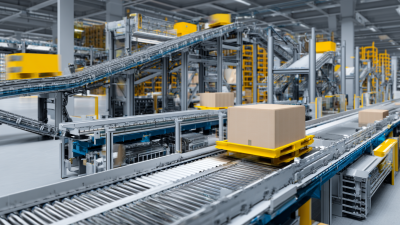
Roller conveyors are efficient for moving boxes and pallets. They are often found in warehouses and distribution centers. Roller designs vary, but they all support heavy loads. Interestingly, about 30% of warehouses employ roller systems.
Tips: Evaluate your material type before selecting a conveyor system. Choose based on weight and size for optimal performance. Monitor wear and tear to maintain efficiency. Regular maintenance is key to preventing costly downtime.
Some conveyor systems can be expensive to install. High initial costs may discourage businesses. However, considering long-term savings can change perspectives. The right conveyor increases productivity over time. Finding this balance is crucial for decision-making.
What is Conveyor Manufacturing and How Does it Work?
| Type of Conveyor |
Description |
Industries |
Applications |
| Belt Conveyor |
Uses a continuous belt to transport materials. |
Manufacturing, Mining, Logistics |
Material handling, Sorting, Packaging |
| Roller Conveyor |
Consists of rollers mounted in frames to move material. |
Warehousing, Manufacturing |
Transportation of pallets and heavy loads |
| Chain Conveyor |
Uses chains to pull items along a track. |
Automotive, Food processing |
Heavy load transportation, Assembly lines |
| Screw Conveyor |
Uses a rotating helical screw to transport bulk materials. |
Agriculture, Food processing |
Transporting grains, powders, and granules |
| Magnetic Conveyor |
Utilizes magnets to move ferrous metal parts. |
Manufacturing, Recycling |
Automated sorting, Parts handling |
Maintaining and Troubleshooting Conveyor Systems for Optimal Performance
Maintaining conveyor systems is crucial for their optimal performance. Regular inspections help identify wear and tear. Check for loose belts, worn pulleys, and signs of misalignment. Lubrication is often overlooked but essential. Neglecting lubrication can lead to increased friction and eventual failure.
Troubleshooting conveyor issues requires a systematic approach. Start with the basics. Is the power supply stable? Are there any blockages? Often, cleaning the area can resolve many problems. However, some issues are more complex. For instance, a misaligned belt may require adjustment. This may seem simple, but it can be tricky. It’s important to test after making changes.
Everyone has room for improvement. Sometimes, conveyor performance dips unexpectedly. This can be frustrating. Reflecting on past maintenance practices may shed light on recurring problems. Documenting issues can help in spotting patterns. Small details often lead to significant breakthroughs in performance. A proactive mindset is key in maintaining conveyor efficiency.