2026 Top Conveyor and Automation Trends You Need to Know?
As we move toward 2026, the landscape of conveyor and automation technology is rapidly evolving. Industries are increasingly adopting these systems to enhance efficiency. However, the integration of new technologies presents both opportunities and challenges.
Understanding current trends in conveyor and automation is crucial for businesses. Companies must adapt to automation innovations while addressing potential disruptions. The rise of artificial intelligence, for instance, poses questions about workforce impacts and system reliability. Businesses need to find balance.
Embracing change in conveyor and automation can feel overwhelming. Organizations often face hurdles in implementation. Still, failing to innovate can lead to falling behind. Industry leaders must remain proactive and explore how these trends can shape their future.
2026 Projected Growth of Conveyor Systems Market and Automation Trends
The conveyor systems market is projected to grow significantly by 2026. Experts estimate a CAGR of around 4.5% during this period. This growth reflects a rising demand for efficiency in production lines. Many industries are investing heavily in automation. They seek to minimize labor costs and optimize processes.
Automation trends in conveyor systems include the integration of advanced technologies. Companies are exploring AI and IoT solutions. These technologies enhance real-time monitoring and predictive maintenance. However, transitioning to these systems is not without challenges. Many businesses struggle with high initial investments. They also face a skills gap in their workforce, hindering effective implementation.
Additionally, sustainability is a major focus in the market. More firms aim to reduce their carbon footprint. Energy-efficient conveyors are gaining traction. This shift requires careful planning and investment. Balancing cost-efficiency with innovation can be daunting. As the landscape evolves, companies must adapt or risk being left behind.
Impact of Industry 4.0 on Conveyor and Automation Technologies in 2026
In 2026, Industry 4.0 will significantly influence conveyor and automation technologies. The convergence of the Internet of Things (IoT) and advanced robotics is reshaping logistics. Data from the International Federation of Robotics indicates the global stock of industrial robots will exceed three million units by 2026. This growth highlights a shift towards highly automated systems.
Moreover, smart conveyors will become a cornerstone of efficient operations. They can self-adjust based on real-time demands. Research shows that automated conveyor systems can boost productivity by up to 30%. However, the transition is not without challenges. Companies may face integration issues and high initial costs. These factors could limit the speed of adoption.
Cybersecurity will be a major concern as automation increases. With systems connected to the internet, vulnerabilities rise. A report by Cybersecurity Ventures forecasts that cybercrime damages could reach $10.5 trillion annually by 2025. This threat compels businesses to rethink their security measures. Ignoring these risks might derail progress in automation initiatives.
2026 Top Conveyor and Automation Trends
Key Innovations in Conveyor Belt Design and Materials for Enhanced Efficiency
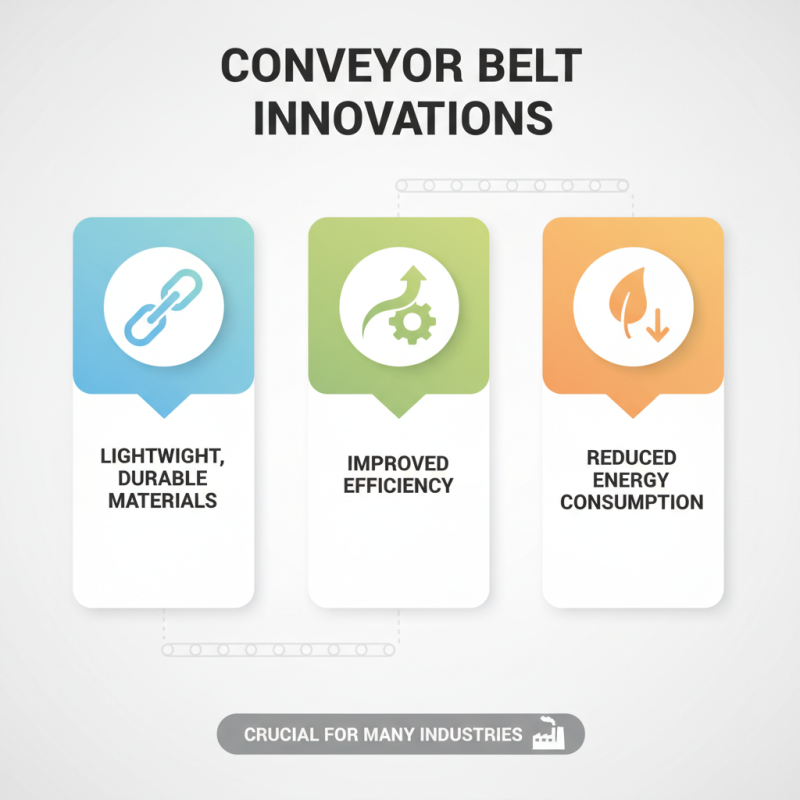
In recent years, conveyor belt design has undergone significant changes. Innovations focus on materials that improve efficiency. Lightweight, durable materials are often used now. They help reduce energy consumption. This shift is crucial for many industries.
Consider using modular conveyor systems. These systems offer flexibility. They can be easily adjusted to meet changing needs. Additionally, advanced sensors are integrated into designs. These sensors provide real-time feedback. This data helps in identifying potential issues before they become costly problems.
Tips: Regular maintenance is key. Inspect belts and components frequently. Even minor wear can lead to major inefficiencies. Also, embrace opportunities for employee training. Understanding new technologies can enhance system performance. Make use of operator feedback. Often, they can provide insights into practical improvements.
The Role of Artificial Intelligence in Optimizing Conveyor Operations
In the world of automation, conveyor systems are evolving rapidly. Artificial Intelligence (AI) plays a crucial role in this transformation. By analyzing vast amounts of data, AI optimizes conveyor operations like never before. Predictive maintenance, for example, reduces downtime. Smart sensors determine when a component might fail. This proactive approach minimizes disruptions.
Tips for integrating AI: Start small. Test AI solutions on limited operations first. Monitor results closely before scaling up. Training staff is essential. They need to understand how AI impacts their daily tasks. Engaging your team creates a smoother transition.
However, there are challenges. AI can be complex and costly. Not every facility needs a high-tech solution. Sometimes, simple upgrades and adjustments can yield significant improvements. Reflecting on your specific needs helps identify the right path forward. Aim for balance between innovation and practicality. Use AI where it adds value, not just for the sake of technology.
Sustainability Initiatives Driving Automation Practices in Warehousing and Logistics
Sustainability initiatives are reshaping automation in warehousing and logistics. Businesses are increasingly aware of their environmental impact. They’re investing in energy-efficient systems and waste reduction practices. Automated systems help track and reduce energy consumption. This ensures a smoother transition to greener methods.
Tips: Assess your current operations. Identify areas where energy is wasted. Small changes can make a big difference.
Moreover, materials used in automation are also changing. Eco-friendly materials are gaining popularity. Reusable packaging and recyclable components are now standard. These changes not only help the planet but can also lower costs. However, the transition can be challenging. Organizations must adapt their supply chains effectively.
Tips: Prioritize partnerships with suppliers dedicated to sustainability. Collaboration can enhance your green initiatives. Always seek feedback on new practices.