Leave Your Message

10 Best Conveyor Technology Innovations You Should Know?

Conveyor technology plays a crucial role in modern manufacturing and logistics. As industries evolve, advancements in conveyor systems enhance efficiency and minimize operational costs. According to a market research report by MarketsandMarkets, the global conveyor system market is projected to reach $7.0 billion by 2025, growing at a CAGR of 4.5%. This trend highlights the importance of innovation in conveyor technology.

Recent innovations focus on automation, energy efficiency, and flexibility. For example, smart conveyor systems now integrate IoT technology. They offer real-time monitoring, improving maintenance and reducing downtime. However, challenges still exist, such as high initial costs and the need for specialized training.

While many companies embrace these advancements, not all have kept pace with the rapid changes. It raises questions about investment and ongoing support. Understanding the landscape of conveyor technology is essential for businesses striving to remain competitive. Keeping up with these innovations may require reevaluation of existing systems. Adopting new technologies is not just a choice but a necessity for future growth.
10 Best Conveyor Technology Innovations You Should Know?

The Evolution of Conveyor Technology: A Historical Overview

10 Best Conveyor Technology Innovations You Should Know?

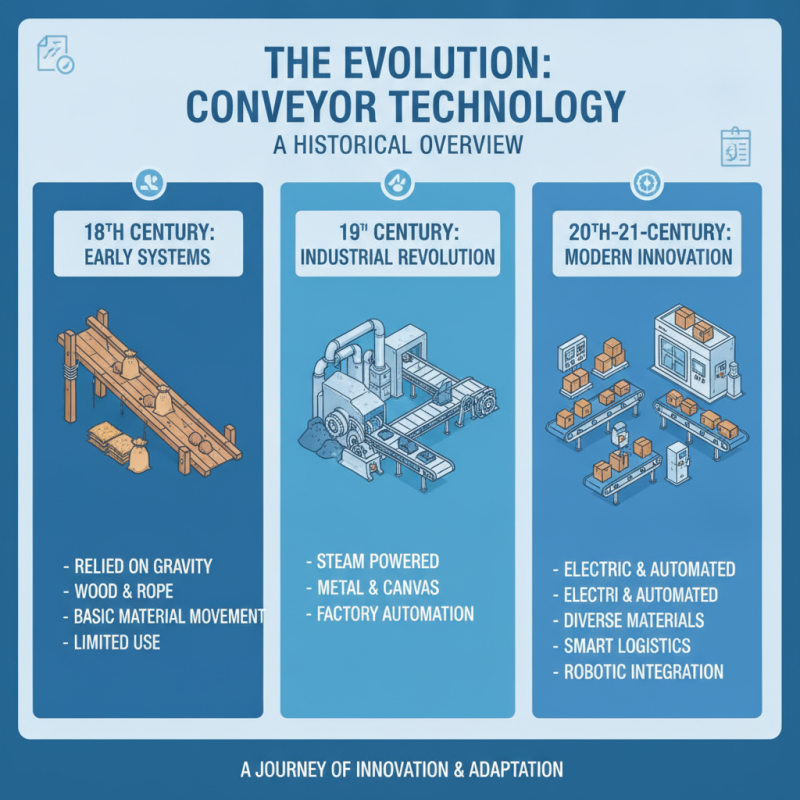
The history of conveyor technology reveals a journey of innovation and adaptation. Early systems emerged in the 18th century. These basic forms relied heavily on gravity to move materials. They were made from simple materials like wood and rope. Despite their limitations, these systems laid the groundwork for future developments.

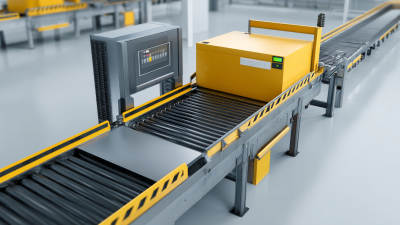
In the 20th century, electric motor-driven conveyor systems transformed industries. This shift allowed for increased efficiency and reduced manual labor. Innovations such as belt conveyors and roller systems enhanced material handling in factories and warehouses. However, these advancements also created new challenges. Maintenance became crucial, and improper handling often led to delays and accidents.

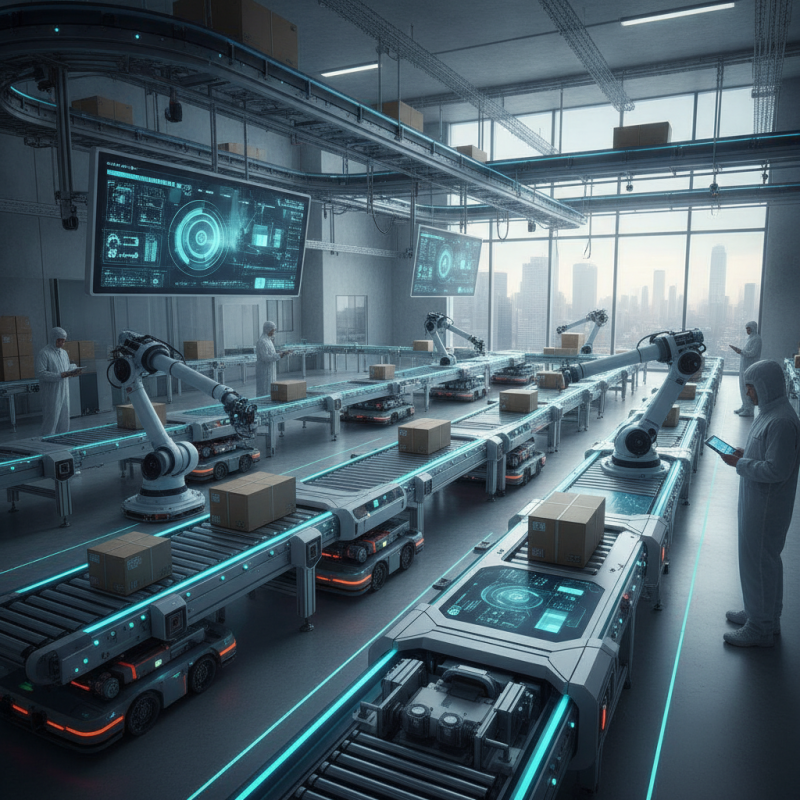
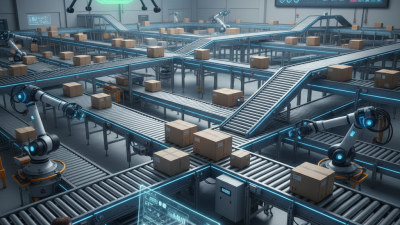
As technology evolved, automated conveyors introduced further efficiency. Sensors and smart systems now monitor performance in real-time. While these advancements offer significant benefits, they also raise questions. Are we relying too much on automation? Balancing technology and human oversight remains a critical consideration. The evolution of conveyor technology is a testament to human ingenuity, yet it calls for thoughtful reflection on its impact on the workforce.
Key Innovations in Conveyor Belt Materials and Their Impact on Efficiency

Innovations in conveyor belt materials are transforming industries. Lightweight materials enhance flexibility, enabling smoother operations. Durable alloys resist wear and tear. These advancements significantly improve efficiency by reducing downtime and maintenance costs.

**Tip:** Always evaluate material options based on your specific application needs. Not every new material is right for every situation.

Smart materials, like those equipped with sensors, provide real-time data. This leads to proactive maintenance and minimizes breakdowns. Implementing such technologies can lead to agile production lines.

**Tip:** Consider piloting new materials on smaller scales first. A gradual approach helps identify potential issues early.

The focus on eco-friendly materials is growing. These options reduce environmental impact and often offer enhanced performance. Integrating sustainable practices into conveyor systems can lead to better long-term benefits.

The Role of Automation in Modern Conveyor Systems: Trends and Data

10 Best Conveyor Technology Innovations You Should Know?

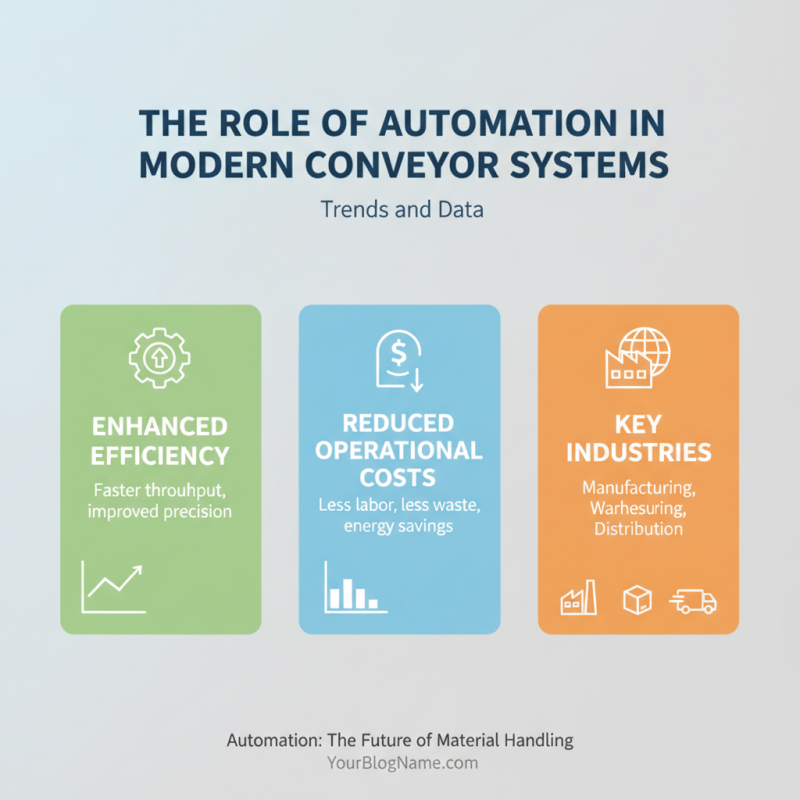
The role of automation in modern conveyor systems is significant. Automation enhances efficiency and reduces operational costs. Many industries benefit from these advancements. Manufacturing, warehousing, and distribution are key areas where automated conveyor systems shine.

These systems can handle various loads, ensuring smooth workflows. They minimize human errors and boost productivity. However, companies may face challenges when integrating new technologies. Outdated infrastructure can hinder the adoption of modern systems. Careful planning is essential for successful implementation. Employees must also adapt to new processes, which can create friction.

Data analytics is another crucial element. Analyzing performance helps identify bottlenecks. It informs decisions to optimize operations. Despite these advancements, over-reliance on automation may lead to vulnerability. Systems should remain flexible to adapt to changes. Balancing automation with human oversight can drive a more resilient operation.

Sustainability in Conveyor Technology: Eco-Friendly Innovations

The conveyor technology landscape is evolving, with a strong focus on sustainability. Eco-friendly innovations are reshaping how industries operate. Many businesses are now prioritizing energy-efficient materials and designs. These innovations help reduce waste and lower carbon footprints.

One notable development is the use of biodegradable conveyor belts. These belts are made from sustainable materials that decompose over time. They offer a viable alternative to traditional plastic belts, which contribute to long-term pollution. Another innovation is energy recovery systems. These systems capture excess energy and reuse it, promoting efficiency and reducing energy consumption.

However, the industry still faces challenges. Not all eco-friendly materials perform as well as conventional options. Companies must balance cost, efficiency, and environmental impact. Finding effective ways to integrate sustainable practices into existing systems can be complex. Continuous research and development are crucial for advancing these technologies and making a lasting impact.

10 Best Conveyor Technology Innovations in Sustainability

Case Studies: Successful Implementations of Cutting-Edge Conveyor Systems

In recent years, cutting-edge conveyor systems have transformed operations in various industries. One notable case involved a large warehouse implementing a modular conveyor system. They experienced a significant increase in throughput. The transition resulted in faster sorting and reduced delays. However, the initial setup was complex, requiring extensive training for staff. Some employees struggled to adapt, which highlighted the importance of ongoing support.

Another example can be seen in a manufacturing facility that adopted automated conveyor technology. This innovation streamlined their production line, significantly enhancing efficiency. Yet, the integration process was not without challenges. A few machines experienced compatibility issues, leading to temporary halts. This showcased the critical need for thorough testing before full implementation, ensuring all components function seamlessly together.

These case studies highlight both the potential benefits and pitfalls of sophisticated conveyor systems. While the advancements offer remarkable improvements, real-world applications often reveal needs for adjustments. Companies must prepare for an iterative process, addressing challenges as they arise. Continuous learning from implementation experiences can lead to better outcomes and more resilient operations.

10 Best Conveyor Technology Innovations You Should Know

Innovation Description Benefits Industry Application
Automated Guided Vehicles (AGVs) Robotic vehicles that transport materials without human intervention. Increased efficiency, reduced labor costs, and enhanced safety. Manufacturing, warehousing.
Smart Conveyor Systems Conveyor systems equipped with IoT technology for real-time monitoring. Improved maintenance, predictive analytics, and reduced downtime. E-commerce, food and beverage.
Modular Conveyors Flexible conveyor systems that can be easily reconfigured. Adaptability to changing workflows and easy installation. Assembly lines, packaging.
Zero Pressure Accumulation Conveyors that allow products to accumulate without pressure. Reduced product damage and optimized space utilization. Distribution centers, manufacturing.
Flexible Belt Conveyors Belt conveyors that can be adjusted to different lengths and angles. Versatility in transporting various goods. Logistics, packaging.
Overhead Conveyors Suspended systems that carry products overhead. Maximized floor space and efficient usage. Automotive, manufacturing.
Air Supported Conveyors Conveyors that utilize air cushion for material transport. Gentle handling of products and reduced wear. Mining, bulk material handling.
Robotic Integration Integration of robots with conveyor systems for enhanced automation. Increased productivity and reduced manual labor. Packaging, assembly lines.
Wireless Conveyor Monitoring Conveyors that can be monitored and controlled wirelessly. Remote management and troubleshooting capabilities. Manufacturing, distribution.