Choosing the best Industrial Conveyors made in China requires more than comparing catalog prices. A reliable conveyor must match the material, load, speed, incline, temperature, and working environment. Coal dust, food-grade powder, and heavy cartons demand different designs. The details matter. Belt thickness, roller alignment, bearing protection, weld quality, and motor efficiency can decide whether a system runs smoothly or stops unexpectedly.
Lawrence Nordell, a respected conveyor design engineer and founder of Conveyor Dynamics, offers a practical reminder: “Design for the material, not merely for the machine.” This principle is essential when evaluating Chinese manufacturers. A supplier should provide clear capacity calculations, component specifications, drawings, test records, and realistic delivery commitments. Factory experience also matters. Look for documented projects, skilled assembly teams, quality-control checkpoints, and traceable replacement parts. Ask whether the supplier conducts load testing before shipment. Small details reveal professional habits.
Price still matters. However, the cheapest quotation may conceal thinner steel, weaker bearings, limited control systems, or poor after-sales support. That concern is not theoretical. A misaligned belt can spill material across a concrete floor within minutes. A hot bearing can create costly downtime. Certification alone cannot prove long-term reliability, either. Buyers should verify standards, inspect samples, review references, and consider an independent factory audit. This guide compares leading Chinese Industrial Conveyors through performance, customization, safety, service, and total ownership cost. There is no universal winner. The best choice depends on your application, budget, and tolerance for operational risk. Even experienced buyers can miss something. That is why careful verification remains necessary.
What Are the Best Industrial Conveyors Made in China?
How Chinese Industrial Conveyors Are Classified by Load, Speed, and Duty
Chinese industrial conveyors are commonly selected by load, belt speed, and duty cycle. Light-duty units often handle parcels, cartons, and small components below 50 kilograms per metre. Medium-duty systems typically carry pallets, sacks, or metal parts between 50 and 500 kilograms per metre. Heavy-duty designs support bulk materials, mining loads, and continuous transfer above that range. These figures are practical buying guides, not universal limits.
Speed changes the conveyor’s structure. Packaging lines may run at 0.3–1.5 metres per second, while bulk systems often operate around 1–3 metres per second. Higher speeds require better belt tracking, guarding, braking, and control accuracy. Grand View Research valued the global conveyor systems market at approximately US$10.6 billion in 2023, with continued growth expected through 2030. That growth reflects automation demand, but market size alone does not prove equipment quality.
Duty classification deserves closer attention. Intermittent conveyors suit warehouses with pauses, while continuous-duty models need stronger bearings, motors, frames, and heat management. ISO 5048 provides calculation methods for belt conveyor power and resistance, helping engineers check capacity rather than trust catalogue claims. In factory audits, I would request test records, motor data, noise readings, and a loaded trial. Chinese suppliers can offer excellent customization. Still, a low price may hide thinner frames or inadequate spare-part planning. Verify the details.
Chinese belt conveyors should be judged by documented compliance, not appearance or price.
ISO 5048 calculates belt conveyor capacity, resistance, and drive power. GB/T 10595 sets technical requirements for belt conveyor design, manufacture, installation, and testing. These standards address different layers. A capable supplier should show how its design satisfies both.
Look for calculation sheets showing belt width, speed, bulk density, inclination, idler spacing, and take-up force. For example, a 1,000-millimetre belt carrying 500 tonnes per hour still needs verified loading conditions. The number alone proves little.
According to MarketsandMarkets’ 2023 Conveyor System Market report, the global market was valued at about USD 8.8 billion in 2023. It may reach USD 12.6 billion by 2028.
That growth increases the need for traceable engineering, not vague claims.
Ask for material certificates, weld inspection records, dynamic testing, emergency-stop checks, and factory acceptance results. ISO 5048 calculations should match actual motor and reducer selections. GB/T 10595 documentation should match drawings, tolerances, and test procedures. A spreadsheet can pass while a transfer chute still spills material. That weakness is often overlooked. Independent inspection remains worthwhile, especially for long conveyors, steep inclines, and dusty bulk handling. No certificate should be accepted without checking its scope, revision, and issuing organization.
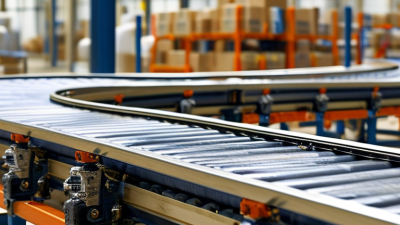
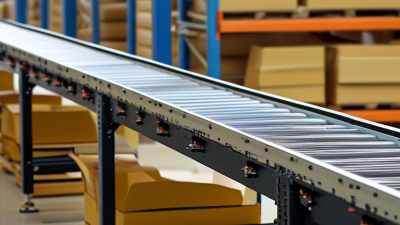
At 0.1–0.5 m/s, roller conveyors offer controlled movement for cartons, totes, and packaged goods. Their open structure makes cleaning, inspection, and component replacement relatively simple. At higher speeds, from 0.8–2.0 m/s, powered rollers can provide smooth transport when products have stable bottoms and consistent spacing. However, light cartons may slip or rotate if roller pitch, surface material, or acceleration is poorly selected. That detail is often underestimated.
Chain conveyors suit pallets, bins, and heavy loads with uneven bases. Their positive drive reduces sliding and maintains movement through stops or inclines. At 0.1–1.0 m/s, they are usually easier to control under heavy loading. Above 1.0 m/s, noise, vibration, chain wear, and guarding require closer attention. In practical factory evaluations, frame stiffness and shaft alignment often matter more than a polished catalogue speed. A fast test can still expose weak welds or poor tensioning.
Tips: Request a loaded speed test across the full 0.1–2.0 m/s range. Check noise, emergency stopping, product stability, and restart behavior. Measure actual load weight, pallet dimensions, and duty cycles before choosing. Ask for material certificates, inspection records, and maintenance instructions. Do not rely on speed alone. A slower conveyor may deliver better accuracy, lower wear, and fewer interruptions. Personally, I would leave extra capacity, because real production rarely stays perfectly consistent.
Chinese mining conveyors can support capacity ranges from about 500 to 20,000 tonnes per hour. The correct range depends on material density, belt width, speed, incline, and transfer-point design. Smaller systems, between 500 and 2,000 t/h, suit quarry feed, crushed stone, and short underground routes. Medium-duty conveyors often handle 2,000 to 8,000 t/h in coal, iron ore, and aggregate plants. Systems above 10,000 t/h require wider belts, stronger drives, advanced control, and carefully engineered loading zones. At 20,000 t/h, even minor spillage can create serious maintenance problems.
Engineering reliability matters more than a headline capacity. In field commissioning, operators should verify actual throughput under wet, abrasive, and uneven loading conditions. Belt tension calculations, pulley selection, emergency stopping, and dust control deserve close review. A conveyor may reach its rated capacity in a test, yet perform differently during seasonal moisture changes. That detail is easy to overlook. It should not be.
Tips: Match capacity to the complete process, not one conveyor alone. Request load-test records, belt-life data, motor efficiency figures, and maintenance access drawings. Check whether the supplier has experience with similar ore density and route length. Leave practical room below the maximum rating; constant operation at the limit can increase wear, heating, and downtime. Also inspect local service capability, spare-part availability, and operator training before approval.
When evaluating industrial conveyors made in China, origin should not replace evidence. A safer review starts with a documented risk assessment under ISO 12100. Check fixed guards, emergency pull cords, interlocked access points, and visible stop-status lights. Ask for factory acceptance test records, not only photographs. The U.S. Bureau of Labor Statistics reported 5,486 fatal work injuries in 2022, so small guarding details deserve serious attention. They are not decoration.
Energy performance needs measured figures. The U.S. Department of Energy states that motor-driven systems consume about 70% of industrial electricity. Request motor efficiency data, variable-frequency-drive settings, and conveyor power at different loads. A useful test records kWh per tonne during startup, steady running, and idle periods. The belt should not keep running while downstream equipment waits. That happens more often than brochures admit. Yet, energy labels alone can mislead when poor alignment increases friction.
Service life depends on maintenance design. Review bearing L10 calculations using ISO 281, belt-splice procedures, pulley protection, and corrosion treatment. Ask how quickly replacement rollers, sensors, and control parts can be supplied. A practical inspection should include noise, temperature, belt tracking, and vibration after several operating hours. The ISO 20816 vibration framework can support repeatable checks. I would also demand a written warranty with clear exclusions. No supplier can honestly promise a fixed lifespan without knowing dust, load cycles, humidity, and operator habits. A cheaper conveyor may become costly when basic spare parts are unavailable.