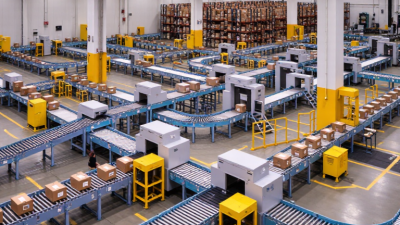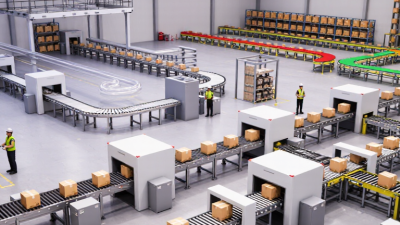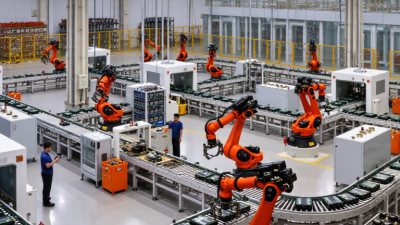
Choosing the right Intelligent Conveyor Systems can reshape how materials move through a facility. The decision affects throughput, labor efficiency, product protection, and long-term operating costs. A conveyor may look impressive during a demonstration, yet perform poorly beside a dusty packing line or a crowded loading area.
This guide examines the practical factors behind a reliable choice. These include product dimensions, weight variation, belt speed, transfer points, available floor space, and cleaning requirements. Engineers should also review sensors, programmable controls, data connectivity, and compatibility with warehouse or manufacturing software. A system handling small cartons needs different controls from one carrying fragile glass containers. Real operating conditions matter.
Safety deserves close attention. Guarding, emergency stops, access points, and maintenance procedures should match recognized industry practices and local requirements. Skilled suppliers can provide testing records, installation guidance, training, and documented service support. Ask how quickly replacement components can arrive. Ask who responds when a sensor fails during a night shift.
No selection is perfect. A detailed spreadsheet cannot predict every jam, noise issue, or operator concern. Pilot testing may reveal problems that specifications conceal. Buyers should challenge optimistic capacity figures and confirm performance with similar products. A lower purchase price can become expensive when cleaning, downtime, or software integration is overlooked. Careful evaluation creates a more dependable investment, even when the final decision remains imperfect.
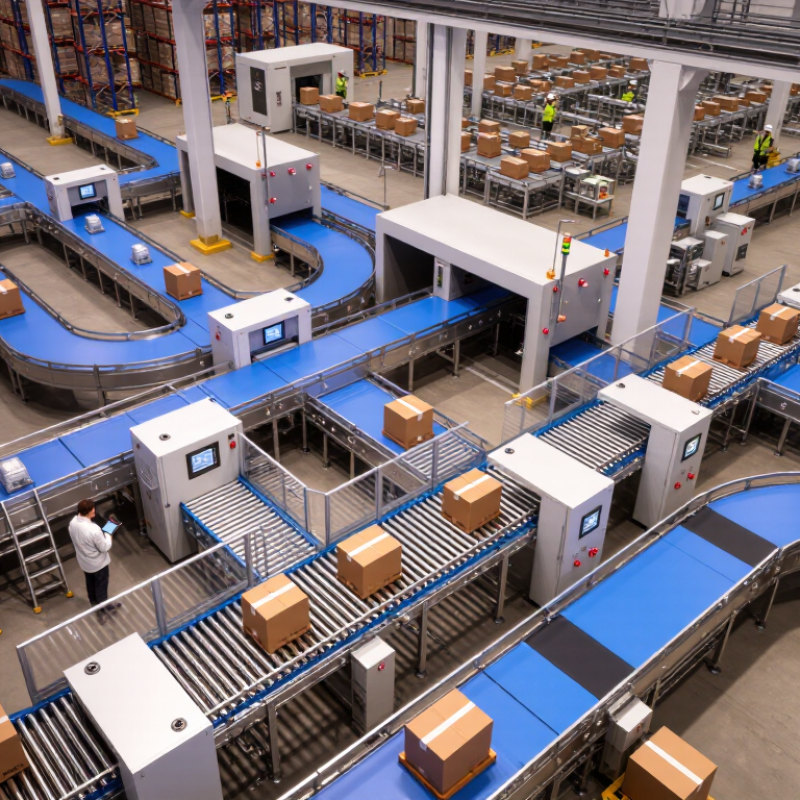
Intelligent conveyor systems are material-handling networks that sense, decide, and respond during operation. Unlike basic conveyors, they use sensors, software, and connected controls to manage product movement. They can identify gaps, detect blockages, and adjust speed without constant manual intervention. This makes material flow more visible and measurable. In practical warehouse work, operators can follow live data instead of relying only on visual checks.
Their core functions include routing, accumulation, speed control, tracking, and fault detection. Sensors monitor package position, weight, spacing, and movement. Control software then sends instructions to motors, diverters, and transfer points. For example, a blocked section can slow nearby zones before products collide. The system may also record cycle times and recurring stoppages. Useful data, when interpreted carefully.
Intelligence does not remove the need for skilled people. Technicians still inspect belts, rollers, wiring, and safety devices. Poor sensor placement can create false alarms or missed detections. That happens. A reliable design combines automation with clear maintenance procedures, operator training, and regular performance reviews. When choosing a system, examine its response time, data accuracy, expansion options, and recovery process after power or network interruptions. Claims should be tested against actual operating conditions, not only demonstrations.
How to Choose Intelligent Conveyor Systems?
Assessing material handling requirements starts with the product, not the conveyor’s software. Record dimensions, weight, surface friction, fragility, and hourly volume. A tote weighing 20 kilograms behaves differently from a sealed carton weighing two kilograms. Measure peak demand, not average demand. In my experience, average figures hide short periods of severe congestion. Also document accumulation needs, transfer points, incline angles, and cleaning routines. Dust, moisture, cold rooms, and temperature changes can affect sensors, belts, and control cabinets. The system must fit the environment.
Operating conditions also determine the right intelligence level. The MHI 2024 Annual Industry Report found that 55% of supply chain professionals expected to increase technology investment. That investment should solve a measured problem, rather than add impressive features. Define required throughput, acceptable noise, recovery time, and maintenance access before selecting equipment. The International Federation of Robotics reported 541,302 industrial robot installations worldwide in 2023, showing how quickly automated operations are expanding. Yet conveyors still need practical human oversight. Ask whether operators can clear a jam safely within minutes. Test barcode reading with damaged labels and uneven lighting. Do not trust a perfect demonstration. A pilot may reveal that product variation, cleaning delays, or poor layout causes more trouble than software. That is useful evidence, even when the first design looks wrong.
Assess material handling requirements and operating conditions before selecting a conveyor. The chart shows a general 1–5 suitability score, where 5 indicates stronger suitability for the listed requirement.
Use belt conveyors for flexible transport and inclined movement, roller conveyors for unit loads and accumulation, and chain conveyors for heavy or demanding loads. Final selection should also consider load dimensions, throughput, layout, temperature, dust, cleaning requirements, controls, and maintenance access.
Choosing an intelligent conveyor starts with the product, not the machine catalog. Belt conveyors suit cartons, while roller conveyors handle rigid containers efficiently. Slat conveyors support uneven items and frequent washing. In a warehouse trial, small packages slipped between widely spaced rollers. A narrower pitch solved the problem, but increased maintenance points. That trade-off deserves attention.
Sensors determine how the system reacts. Photoelectric sensors can detect cartons at transfer points, while weight sensors identify missing or overloaded packages. Encoders track speed and position during accumulation. Sensor placement matters more than sensor quantity. Dust, glare, vibration, and transparent packaging can create false readings. We have seen reliable hardware perform poorly after installation. A short observation period often reveals these weaknesses.
Controls connect motors, sensors, and safety devices into predictable movement. Variable-speed drives reduce product collisions during accumulation. A programmable controller can coordinate zones and stoppages. Software adds value when it provides clear production data, alarm history, and maintenance alerts. Avoid dashboards filled with attractive but unused metrics. Operators need practical information, such as repeated jams at 10:30 each morning. Integration with existing systems should be tested early. Otherwise, a technically advanced conveyor may still create manual work. Performance should be reviewed after real operating conditions change.
How to Choose Intelligent Conveyor Systems?
Integration should be tested on the factory floor, not only in a presentation. Confirm communication with warehouse software, sensors, scanners, and existing controllers. Deloitte’s 2024 Smart Manufacturing Survey reports that 92% of manufacturers view smart manufacturing as a key competitiveness driver. Yet disconnected data remains common. Ask for open interfaces, clear data ownership, and a realistic commissioning plan. A fast conveyor is useless when operators still enter orders manually.
Safety must be designed into movement, access, and recovery. Check emergency stops, guarded nip points, light curtains, safe restart logic, and lockout procedures. ISO 12100 and ISO 13849-1 provide useful risk-assessment frameworks. During site reviews, watch how people actually cross the line. Human habits reveal more than drawings. Small gaps matter.
Maintenance and scalability decide long-term value. MHI’s 2024 Annual Industry Report found that 55% of supply-chain leaders planned to increase technology investment. That investment needs measurable uptime, not impressive screens. Require condition monitoring for motors, belts, and bearings, plus local spare-parts availability. Also test whether technicians can replace a sensor without stopping an entire zone. Think beyond today’s volume. Can the system add lanes, software modules, or robots without rebuilding its control architecture? Sometimes, the cheapest expansion is not the best one. That is worth admitting early.
| Evaluation Dimension | What to Check | Practical Selection Benchmark | Basic Intelligent System | Connected System | Highly Scalable System |
|---|---|---|---|---|---|
| Control Integration | PLC, warehouse-control, manufacturing-execution, and supervisory-system compatibility. | Use documented industrial communication interfaces and confirm data ownership, tag mapping, and fault-handling responsibilities before installation. | Required PLC control with documented I/O. |
Recommended Industrial Ethernet and standardized data exchange. |
Advantage Modular APIs, edge gateway, and event-based data integration. |
| Real-Time Visibility | Access to speed, motor status, accumulation zones, alarms, throughput, and energy data. | Critical operating states should be available to operators and maintenance personnel without requiring manual inspection. | Required Local status lights and fault codes. |
Recommended Dashboard with historical alarms and production counts. |
Advantage Centralized monitoring with condition-based alerts. |
| Safety Design | Emergency stops, safeguarding, access control, safe torque off, risk assessment, and restart prevention. | Design and validate safety functions according to applicable regulations and standards, such as ISO 13849-1, ISO 13850, and IEC 60204-1. | Required Guarding and accessible emergency-stop devices. |
Recommended Safety relays or safety PLC with monitored access points. |
Advantage Zoned safety architecture with diagnostics and controlled reset. |
| Throughput Capacity | Packages or units per hour under actual product dimensions, spacing, merges, transfers, and accumulation conditions. | Size the system using peak demand, not average demand, and include a realistic buffer for product mix and operational variability. | Required Suitable for stable, repetitive flow. |
Recommended Dynamic zoning and routing for variable flow. |
Advantage Parallel lines, intelligent merges, and expandable capacity. |
| Product Handling | Compatibility with package weight, dimensions, surface condition, fragility, and orientation requirements. | Verify minimum and maximum load, belt or roller pitch, transfer gaps, accumulation pressure, and allowable product variation. | Required Defined product range with limited variation. |
Recommended Sensors and recipes for multiple product profiles. |
Advantage Automatic identification and adaptive routing. |
| Maintenance Access | Access to drives, sensors, belts, rollers, controls, and electrical panels without unnecessary production disruption. | Use accessible service points, clear isolation procedures, standardized components, and documented maintenance instructions. | Required Planned manual inspections and corrective repairs. |
Recommended Tool-assisted diagnostics and replaceable modules. |
Advantage Quick-change modules and remote diagnostic support. |
| Preventive Maintenance | Inspection frequency for belts, chains, rollers, bearings, sensors, motors, and electrical connections. | Create maintenance intervals from duty cycle, environment, load, and manufacturer instructions; do not apply one interval to every conveyor. | Required Calendar-based inspection plan. |
Recommended Maintenance alerts linked to operating hours and faults. |
Advantage Condition-based maintenance using vibration, temperature, or current trends. |
| Energy Management | Motor efficiency, variable-speed control, sleep modes, accumulation logic, and energy monitoring. | Compare energy use during production, idle, and accumulation states rather than relying only on motor nameplate ratings. | Required Efficient motors with basic start/stop control. |
Recommended Variable-speed drives and zone sleep functions. |
Advantage Energy dashboards and automated operating optimization. |
| Cybersecurity | User authentication, network segmentation, secure remote access, software updates, backups, and audit logs. | Apply a documented industrial cybersecurity policy and restrict remote access to approved users, devices, and time windows. | Required Controlled local access and configuration backups. |
Recommended Role-based access and segmented control network. |
Advantage Security monitoring, managed updates, and detailed audit trails. |
| Scalability | Ability to add zones, sensors, lines, sortation points, and software functions without replacing the core controls. | Confirm spare electrical capacity, network ports, control-system capacity, physical expansion points, and software licensing conditions. | Required Expansion possible with engineering changes. |
Recommended Modular zones with standardized control blocks. |
Advantage Plug-in modules and distributed controls for phased growth. |
| Data and Analytics | Availability of production, downtime, fault, utilization, and maintenance data in usable formats. | Define required data points, timestamps, retention period, ownership, and reporting method before commissioning. | Required Basic counters and alarm history. |
Recommended Trend reports for throughput and downtime. |
Advantage Historical analytics, utilization tracking, and predictive indicators. |
| Total Cost of Ownership | Purchase price, installation, training, energy, spare parts, software, downtime, and lifecycle support. | Compare the full lifecycle cost over the planned service period instead of comparing equipment price alone. | Required Lower initial complexity and investment. |
Recommended Balanced cost with improved visibility and uptime. |
Advantage Higher initial investment with greater expansion and optimization potential. |
Note: The capability levels are generic planning categories rather than performance claims for a specific supplier. Final selection should be confirmed through a site risk assessment, product-flow study, peak-capacity calculation, integration test, and lifecycle-cost review.
Choosing an intelligent conveyor system starts with measurable performance, not impressive software. Define throughput, parcel size, peak-hour demand, and acceptable downtime. A system moving 2,000 cartons per hour may fail during seasonal surges. Test it with real cartons, uneven weights, and damaged labels. Track uptime, miss-sort rate, energy use, and maintenance minutes per shift. These details expose weaknesses early.
Cost needs a wider lens. Compare purchase price with installation, controls, training, spare parts, and electricity over ten years. The 2024 MHI Annual Industry Report found that 83% of supply chain professionals view technology as a competitive advantage. That does not mean every facility needs maximum automation. A simpler conveyor may deliver better value when labor is stable and product variety is low. Small mistakes matter.
Future needs deserve equal weight. Interact Analysis forecasts the global warehouse automation market will reach about 41 billion US dollars by 2027. Select modular zones, accessible sensors, and open communication standards. They make expansion less disruptive. Ask whether the system can support new order profiles, additional scanning points, and predictive maintenance data. Do not overtrust forecasts. Your own hourly records are often more reliable than a sales presentation. A practical pilot, measured for several weeks, can reveal the difference.