Leave Your Message

Top 10 Designed Conveyor Types for Global Buyers

Choosing the right conveyor can shape an entire material-handling operation. For global buyers, the decision involves more than belt width, motor power, or purchase price. A suitable system must match the product, facility layout, operating speed, maintenance skills, and local safety requirements. This guide explores the top 10 Designed Conveyor types used across manufacturing, warehousing, food processing, logistics, and distribution environments.

Each conveyor design solves a different practical problem. Belt conveyors move cartons smoothly over long distances. Roller conveyors support boxed goods and simplify accumulation. Screw conveyors handle powders and bulk materials inside enclosed channels. Chain, slat, bucket, pneumatic, vibrating, overhead, and flexible conveyors offer further options for specialized workflows. Fit matters. A dusty plant may require sealed components, while a cold warehouse may need materials that tolerate low temperatures. Product weight matters too. A lightweight parcel and a steel component should not share the same design assumptions.

Experienced buyers usually review load capacity, incline angle, belt material, control systems, cleaning access, spare parts, and installation support. They also verify documentation and applicable regional standards before ordering. Small details often decide long-term reliability, such as accessible bearings, guarded pinch points, and correctly sized motors. However, no conveyor is perfect for every site. A technically impressive system may still underperform when operators lack training or replacement parts arrive slowly. The following selection focuses on realistic applications, measurable advantages, and limitations that buyers should examine before making a confident investment.
Top 10 Designed Conveyor Types for Global Buyers

How Conveyor Systems Move Materials Through Industrial Operations

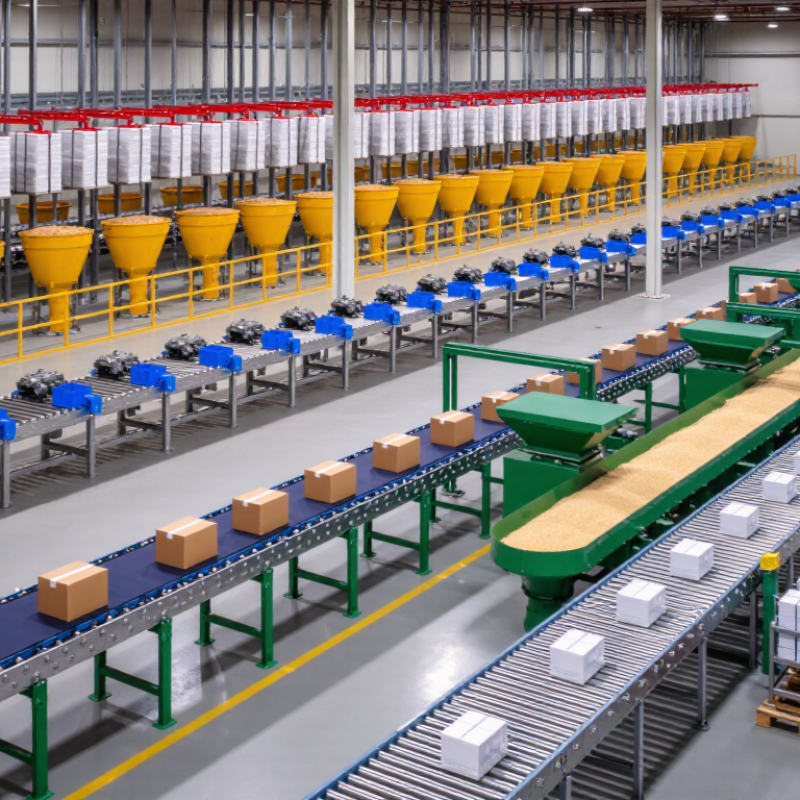
In industrial operations, conveyors create a steady path between receiving, processing, storage, and dispatch. Belt systems carry cartons across long lines; roller conveyors move palletized loads between workstations. Screw conveyors guide powders through enclosed channels, while overhead systems keep hanging products clear of floor traffic. Sensors can pause a line when a transfer point backs up. Small details matter.

MHI’s 2024 Annual Industry Report found that 55% of surveyed supply-chain professionals planned to increase technology investment. That interest reflects a practical need: connect equipment, data, and people without interrupting material flow.

The International Federation of Robotics reported 541,302 industrial robot installations worldwide in 2023. Robots and conveyors often share tasks, moving products between automated cells and human work areas. Still, a clean layout drawing can mislead. A poorly placed chute or a sudden change in package size may cause jams, even when the main conveyor is correctly sized. Engineers should check load weight, speed, transfer height, and maintenance access against real operating conditions. A few seconds of delay can travel down the line.
Ten Common Conveyor Designs and How Each One Works

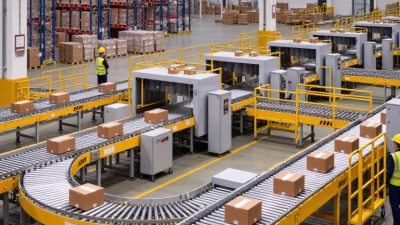
Conveyor designs differ in how they carry, drive, and control a load. MHI’s 2024 Annual Industry Report found that 55% of surveyed supply-chain leaders planned to increase technology investment. That signals interest, not a reason to automate every line. A belt conveyor carries parcels or bulk material on a continuous moving surface. Gravity roller conveyors use a slight slope; powered roller systems move loads with driven rollers and can control accumulation. Chain conveyors pull heavy pallets along fixed paths. They are sturdy, but need careful guarding and maintenance.

A screw conveyor turns a helical blade inside a trough to move powders or grains. Slat conveyors carry items on linked plates, useful for hot, oily, or awkward loads. Bucket elevators lift loose material vertically in attached buckets. Pneumatic conveyors use airflow through pipes, keeping powders enclosed but requiring attention to pressure and abrasion. Small details matter. Product shape, dust, and cleaning access can change the choice. A neat diagram may hide these issues.

Overhead conveyors suspend loads from a moving track, freeing floor space while routing parts through work areas. Spiral conveyors carry cartons between floors in a compact footprint. Each design has limits: bends, speed changes, and uneven loading can cause jams or wear. Before specifying equipment, measure the heaviest and smallest loads, peak flow, and available space. Then test the actual product if possible. It is easy to overlook maintenance access until a jam stops the line.

Top 10 Designed Conveyor Types for Global Buyers - Ten Common Conveyor Designs and How Each One Works

Conveyor Design How It Works Typical Materials or Products Common Applications Key Advantages Buyer Considerations
Belt Conveyor A continuous belt runs around a drive pulley and one or more return pulleys. Rollers or a slider bed support the carrying surface. Cartons, parcels, packaged goods, grain, ore, and other bulk materials. Warehouses, distribution centers, manufacturing lines, mines, and ports. Handles a wide range of product sizes and can move materials over long distances or inclines when fitted with a suitable belt. Check belt material, width, speed, incline, loading method, dust or moisture exposure, and required guarding.
Gravity Roller Conveyor Products move along freely rotating rollers, using a slight decline or manual pushing rather than a drive motor. Cartons, totes, trays, and other items with a firm, flat base. Picking areas, packing stations, loading zones, and short transfer points. Simple design with no conveyor drive motor; sections can often be repositioned or extended. Products must bridge the gaps between rollers. Confirm item weight, base dimensions, slope, and safe control of product speed.
Powered Roller Conveyor Motor-driven rollers or belts beneath the rollers propel products along the conveyor. Zones can be controlled individually. Cases, totes, pallets, and products with a stable, sufficiently rigid base. Automated warehouses, sortation systems, assembly operations, and shipping lines. Provides controlled movement and can support accumulation, routing, and integration with sensors or control systems. Specify load and throughput, product dimensions, accumulation needs, drive method, controls, and available power.
Chain Conveyor One or more powered chains engage a load directly or support attachments that carry it along a defined path. Pallets, heavy fixtures, containers, and products requiring positive engagement. Automotive and industrial assembly, pallet handling, and heavy-duty production lines. Can convey heavy loads and operate in demanding environments when correctly designed and maintained. Confirm load distribution, chain type, speed, lubrication needs, noise limits, guarding, and maintenance access.
Slat Conveyor Flat or shaped slats are attached to chains and travel as a continuous carrying surface around the conveyor path. Bottles, containers, components, and products needing stable support. Packaging, bottling, assembly, and transfer between process stages. Offers a durable, stable conveying surface and can be configured for straight runs, curves, or inclines. Choose slat material and surface for product contact, temperature, cleaning requirements, load, and curve layout.
Screw Conveyor A rotating helical screw moves bulk material through a trough or tube. The system may be horizontal, inclined, or vertical within design limits. Powders, flour, grain, pellets, and other free-flowing or semi-free-flowing bulk materials. Food processing, agriculture, chemical handling, and bulk-material transfer. Enclosed designs can limit spillage and dust, and the conveyor can meter or transfer material in a compact footprint. Assess material flow, abrasiveness, moisture, temperature, inclination, cleanability, and the risk of material degradation.
Bucket Elevator Buckets attached to a belt or chain scoop or receive bulk material and lift it vertically before discharging at the top. Grain, seeds, pellets, powders, and other bulk solids suitable for bucket handling. Grain facilities, mills, processing plants, and bulk storage operations. Moves bulk material vertically while using less floor space than many inclined conveying arrangements. Check capacity, material properties, bucket style, discharge method, dust control, access, and explosion-protection requirements where applicable.
Pneumatic Conveyor Airflow carries material through a pipe or duct. Systems generally use either dilute-phase suspension or denser-phase movement. Dry powders, granules, pellets, and other materials compatible with airflow conveying. Food, pharmaceutical, plastics, and chemical processing plants. Enclosed pipework can route material around equipment and reduce open handling and transfer-point spillage. Evaluate air demand, conveying distance, material fragility and abrasiveness, filtration, wear, cleaning, and product separation needs.
Overhead Conveyor A powered or manually moved trolley travels along an elevated track, carrying products from hangers or carriers. Hanging garments, components, painted parts, and products transported on dedicated carriers. Assembly plants, finishing lines, garment handling, and process areas where floor space is limited. Uses space above the work area and can connect multiple operations along an overhead route. Verify building clearances, suspended-load limits, carrier design, route changes, maintenance access, and protection of people below.
Vibratory Conveyor A trough or pan vibrates in a controlled motion, advancing or distributing material along its surface. Bulk solids, food products, small parts, and materials requiring gentle or metered movement. Screening, feeding, sorting, cooling, and transfer in processing lines. Can combine conveying with functions such as feeding, screening, or product distribution, depending on the design. Test the material where possible; performance depends on particle size, flow behavior, moisture, vibration settings, and noise limits.

Where Different Conveyor Types Are Used Across Industries

Top 10 Designed Conveyor Types for Global Buyers

Different conveyor types solve different movement problems across industries. Belt conveyors handle cartons, bags, and packaged food in warehouses and processing plants. Roller conveyors suit distribution centers where flat-bottom boxes need quick transfer. Powered roller models work well around pallet loading areas. Gravity rollers remain useful for short, low-cost lanes, but operators must control speed manually.

Cleated belt conveyors move products up an incline without frequent sliding. Modular belt conveyors support washdown areas in food production and beverage plants. Screw conveyors carry powders, grains, and wet materials through enclosed channels.

Their compact design helps factories save floor space, though cleaning can be difficult. Chain conveyors transport heavy pallets, engine parts, and steel components in manufacturing facilities. They need accurate alignment and regular lubrication.

Overhead conveyors free floor space in garment plants, painting lines, and automotive workshops. Slat conveyors provide stable movement for bottles, cans, and rigid containers. Pneumatic conveyors move lightweight powders through sealed pipelines, reducing dust exposure when properly engineered.

Each choice depends on load weight, temperature, moisture, speed, and cleaning requirements. A conveyor that performs well in a dry warehouse may fail near steam, oil, or abrasive dust. Real site measurements matter more than catalog capacity. Buyers should also question maintenance access, emergency stops, spare parts, and operator training. Small design compromises often become expensive production delays.

How to Compare Conveyor Capacity, Layout, and Material Needs

Top 10 Designed Conveyor Types for Global Buyers
How to Compare Conveyor Capacity, Layout, and Material Needs

A conveyor’s rated capacity means little without the product’s weight, dimensions, and flow pattern. Compare expected peak throughput, not just the daily average. CEMA’s Belt Conveyors for Bulk Materials explains how belt width, speed, loading profile, and material density affect bulk-handling capacity. For cartons, check the smallest and largest package sizes; a narrow transfer gap can catch a soft box. Small detail. Big effect.

Layout changes the choice. Measure turns, elevation changes, access routes, and space for cleaning or maintenance. A long, straight run may suit a belt conveyor, while a steep rise could require cleats or another conveying method. Material matters, too: damp fines can cling to surfaces, while abrasive aggregate can wear them quickly. MHI’s 2024 Annual Industry Report found that 55% of respondents planned to increase supply-chain technology investment. That signals growing interest in automation, but it does not prove every site needs a fully automated line.

Ask suppliers to state capacity assumptions in writing, including load spacing, operating hours, and material condition. Then compare those assumptions against a real sample and a site drawing. Estimates can still miss seasonal variation. A trial run may reveal what the spreadsheet cannot.

Top 10 Designed Conveyor Types for Global Buyers

Typical continuous throughput ranges help buyers compare conveyor capacity before reviewing layout constraints and material characteristics.

Capacity values are representative engineering ranges for bulk or unit-material applications. Actual performance depends on material density, particle size, incline, conveyor width, speed, loading method, and operating conditions. Belt conveyors suit long-distance bulk handling, screw and drag conveyors work well in enclosed layouts, bucket elevators handle vertical lifting, and roller conveyors are mainly used for packaged unit loads.

Global Factors to Consider When Selecting a Conveyor System

Top 10 Designed Conveyor Types for Global Buyers

Global Factors to Consider When Selecting a Conveyor System

Global buyers should match conveyor design with the product, facility, and operating environment. Common options include belt, roller, chain, slat, screw, bucket, pneumatic, overhead, spiral, and vibrating conveyors. Each type handles different loads, speeds, slopes, and transfer points. A fragile package may need a soft belt, while hot or heavy materials may require metal components and stronger drives.

Regional conditions can change the correct choice. Check local electrical requirements, safety rules, guarding expectations, and documentation standards before ordering. Humid coastal sites need corrosion-resistant frames and sealed bearings. Cold warehouses may require suitable lubricants and flexible belts. Food facilities often need cleanable surfaces, hygienic layouts, and controlled access. Dusty operations demand effective sealing and carefully selected motors.

Throughput calculations should include peak demand, not only average demand. Measure product size, weight, spacing, incline, and expected operating hours. Leave room for maintenance access and future expansion. Spare parts availability matters when the site is far from suppliers. Training quality matters too. A sophisticated system can underperform if operators cannot adjust or inspect it safely.

No design is perfect.

In practical evaluations, buyers sometimes focus on purchase price and overlook energy use, cleaning time, noise, and downtime. That decision can become expensive later. A detailed site survey, realistic testing, and written acceptance criteria reduce this risk, although even careful planning may need revision after installation.