Leave Your Message
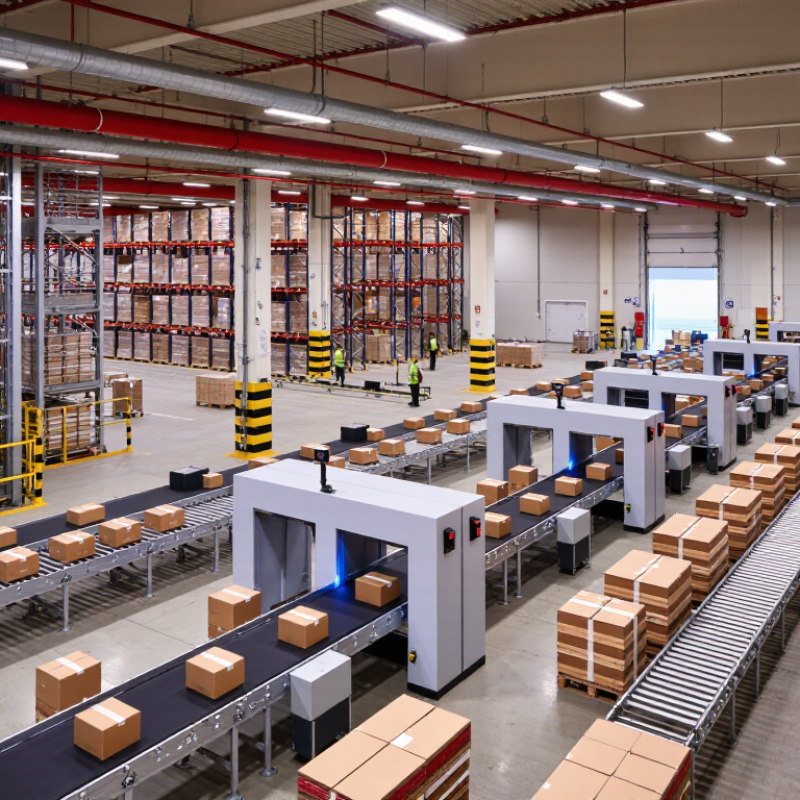
Conveyor systems rarely look dramatic, yet they quietly determine how products move, accumulate, and arrive. In a distribution center, a belt conveyor may carry cartons past scanners, while powered rollers guide heavier pallets toward shipping doors. These choices affect throughput, labor exposure, energy use, maintenance, and product damage. Conveyor Equipment is therefore more than a machine category. It is an operational decision.
Market evidence shows why this decision deserves careful attention. Grand View Research valued the global conveyor system market at approximately USD 10.6 billion in 2023 and forecasts a 5.1% compound annual growth rate from 2024 to 2030. MHI’s 2024 Annual Industry Report also identifies automation and digital supply-chain technologies as continuing investment priorities among industry leaders. However, market growth does not make every conveyor suitable. A fast system can still create bottlenecks at picking stations.
The main types include belt, roller, chain, screw, overhead, vertical, and sortation conveyors. Each design answers a different material-handling problem. Belt conveyors suit parcels, packaged goods, and uneven surfaces. Roller conveyors work well with rigid cartons and pallets. Screw conveyors often handle bulk materials in enclosed routes. Vertical conveyors save floor space, but they require careful load and safety planning.
A neat list can mislead. Real facilities have dust, temperature changes, awkward cartons, and rushed operators. Selection should begin with product dimensions, weight, speed, incline, cleaning needs, and future capacity. CEMA guidance and OSHA conveyor-safety requirements provide useful technical reference points, but site-specific validation remains essential. The best solution is rarely the most impressive one. It is the one that moves the right load reliably, safely, and economically.
What Are the Top Types of Conveyor Equipment?
Conveyor equipment is a mechanical system for moving materials between controlled points. It carries items steadily, rather than relying on repeated manual lifting. Common designs include belt, roller, chain, screw, and pneumatic conveyors. Each system uses a different moving force. Belts support cartons, bags, and bulk goods on a continuous surface. Rollers move rigid packages with less contact. Screw flights push powders or wet materials through enclosed spaces. Air pressure moves lightweight particles through sealed pipes.
Movement begins at the loading point. An electric motor turns a drive pulley, shaft, or sprocket. Tension and friction keep the material traveling in the intended direction. Rollers transfer weight across a frame. Sensors can stop, divert, or slow items when spacing changes. This control reduces collisions and protects workers near transfer points. In a warehouse, a belt may move boxes several meters per minute. In a processing area, a screw conveyor may handle dense material gradually. Real conditions are less tidy.
Dust, moisture, heat, and uneven loading can change performance. Maintenance teams often find that small alignment errors create large problems. A belt may look strong, yet poor tracking can damage its edges. Operators should inspect guards, bearings, emergency stops, and loading zones regularly. Capacity must match material weight, size, and flow behavior. A faster conveyor is not always better. It can cause jams, spills, or product damage. Some layouts need transfer points, which are easy to overlook. Field testing remains important, and that step is sometimes skipped.
| Conveyor Equipment Type | How It Moves Materials | Best-Suited Materials | Typical Direction or Layout | Main Advantages | Common Limitations | Typical Applications |
|---|---|---|---|---|---|---|
| Belt Conveyor | A continuous belt travels over powered pulleys and idlers, carrying materials on its surface. | Boxes Packages Bulk solids Parts | Horizontal, inclined, declined, curved, or troughed layouts. |
|
|
Mining, food processing, distribution centers, manufacturing, agriculture, and warehousing. |
| Roller Conveyor | Materials move over a series of cylindrical rollers. Rollers may be gravity-powered or driven by motors, belts, or chains. | Cartons Pallets Totes Rigid containers | Usually horizontal or slightly inclined; straight and curved sections are available. |
|
|
Parcel handling, pallet movement, assembly lines, shipping areas, and warehouse storage systems. |
| Chain Conveyor | One or more powered chains engage with flights, slats, or attachments to push or carry loads. | Pallets Heavy components Crates Industrial containers | Horizontal, inclined, or specialized transfer layouts. |
|
|
Automotive production, pallet handling, metalworking, foundries, and heavy manufacturing. |
| Screw Conveyor | A rotating helical screw, or auger, moves material through a trough or enclosed tube. | Powders Granules Sludge Small bulk solids | Horizontal, inclined, or vertical over relatively short distances. |
|
|
Food processing, wastewater treatment, chemical processing, agriculture, and cement production. |
| Bucket Elevator | Buckets attached to a belt or chain scoop material and lift it vertically before discharging it at the top. | Grain Cement Pellets Dry bulk solids | Primarily vertical, with standard or continuous bucket arrangements. |
|
|
Grain terminals, feed mills, cement plants, mineral processing, and bulk storage facilities. |
| Drag Chain Conveyor | A chain fitted with flights drags bulk material through an enclosed trough. | Coal Ash Wood chips Grain | Horizontal, inclined, or multi-directional routes within a contained casing. |
|
|
Power generation, bulk material handling, agriculture, mining, and industrial waste processing. |
| Pneumatic Conveyor | Airflow transports powdered or granular material through a pipeline by dilute-phase or dense-phase conveying. | Powders Fine particles Granules Dry ingredients | Flexible horizontal and vertical routing through enclosed pipelines. |
|
|
Pharmaceutical production, food processing, plastics, chemicals, and bulk powder handling. |
| Vibratory Conveyor | Controlled vibration causes material to move through a pan, trough, or screen in small forward jumps. | Food products Aggregates Small parts Bulk solids | Horizontal or gently inclined layouts; can include screening or separating sections. |
|
|
Food sorting, aggregate processing, recycling, mining, foundries, and parts feeding. |
| Overhead Conveyor | Carriers, trolleys, or hooks travel along an elevated track, suspending products above the floor. | Hanging parts Garments Automotive components Containers | Elevated horizontal, inclined, and looped routes with curves and transfers. |
|
|
Garment handling, painting lines, automotive assembly, food processing, and light manufacturing. |
| Pallet Conveyor | Powered rollers, chains, or slats move standardized pallets between storage, production, and shipping areas. | Loaded pallets Bulk containers Heavy unit loads | Horizontal, accumulation, transfer, lift, and turntable configurations. |
|
|
Distribution centers, manufacturing plants, warehouses, cold storage, and shipping operations. |
Conveyor selection depends on material characteristics, load size, required capacity, travel distance, elevation change, operating environment, sanitation requirements, and the desired level of automation.